Showing posts with label Rewatch. Show all posts
0

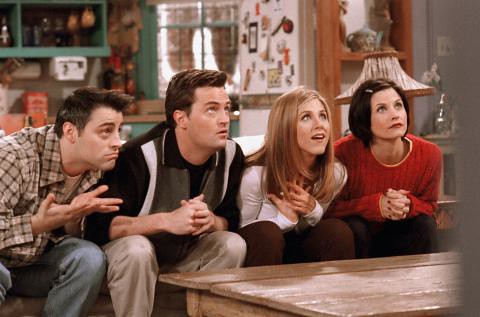
The Rewatch: Friends - Season 6

Certain shows, like The Golden Girls, are timeless. Sure, there are some dated references, but for the most part, the jokes and situations are just as relevant today as they were when the show was airing. One thing I've been noticing about this Rewatch, though, is as time goes on, and television gets better and better, Friends is beginning to fossilize. You wouldn't think a simple sitcom about a group of people hanging out would age rapidly, but the tone, writing, and plotlines of Friends are looking more archaic with every passing season.

That's not to say that it's a bad show now; it's just very of-the-moment in a way that I didn't expect. The '90s technology, the continued reliance on gay panic jokes, Bruce Willis with hair... All of these make the show look older than it really is. Season 6 did have a few welcome changes, though. I mentioned in the Season 5 post that Friends is weakest when it focuses too heavily on the romances within the group. While there is still certainly plenty of that going on, this season definitely has a better balance of non-romance episodes, in which they get back to the silly friend interactions that made the show so successful in the first place.

However, as shows goes on, characters tend to calcify into extreme versions of their biggest personality traits, and that is definitely beginning to occur here. For the most part, everyone still acts like actual human beings, but Season 6 is when you can start charting things like Monica turning from organized neat-freak into compulsive, anal-retentive shrew, or Ross from clumsy-at-relationships to full-on psychotic liar. When the comedic situations turn from things like "This lady is messy!" to "I'm going to keep my marriage a secret from the bride herself!" you know things are getting too wacky, too fast.

The first and last batch of episodes of the season focuses on the shifting romantic relationships between Ross/Rachel (attempted annulment, eventual divorce) and Monica/Chandler (moving in together, marriage proposal), but in the middle, there are some real gems. As I said in Season 5, Friends really shines in their Thanksgiving episodes, and Season 6 is no exception. There's also a fun two-parter in an alternate universe in which Monica is still fat, Joey is still a soap star, Ross is still married to Carol, and so on.

This is also the season in which Ross is a professor, and has an affair with one of his students (Elizabeth). That may have worked as a one-off episode, but Elizabeth sticks around for several episodes, and is far too boring a character to justify the time spent on her. Ditto for Joey's temporary roommate Janine. Guest stars apparently work best on this show when their appearances are brief. The episodes that really work best are the ones that stick to the core cast, and just let their personalities bounce off of each other.


Notable Guest Stars: As mentioned above, there's Alexandra Holden as Elizabeth and Elle Macpherson as Janine, neither of whom should have gotten as much screen time as they did, the former because her character doesn't have enough personality, and the latter because... let's just say her range is limited. Bruce Willis also shows up as Elizabeth's father, and is similarly over-used. There are some good flashing guest appearances, though, from Reese Witherspoon as Rachel's sister Jill to the always-wonderful Missi Pyle as one of Ross' ill-fated dates. The usual recurring folks (Elliot Gould, Christina Pickles, Tom Selleck, Maggie Wheeler, etc.) are also back, and they're always a welcome presence.

What's Keeping Ross and Rachel And Their Apparently Greatest Love in the History of the Earth Apart This Time: After the drunken wedding in Vegas, there are several episodes devoted to its dissolution. Ross trying to keep their marriage going in secret is one of the dumbest things ever written for this show, but I can't deny that there are also some genuinely funny aspects to this most recent split. After the divorce is final, they're able to get back to a state of platonic friendship, which is nice to see, though I'm aware that it won't last.

Best Episode: This one's easy. "TOW Ross Got High" is the season's Thanksgiving episode, and it is just wonderful. Between Rachel's disastrous trifle and the Ross/Monica exchange where they hysterically expose each other's secrets to their parents, this episode fires on all cylinders from beginning to end.

Worst Episode: A trio of the Elizabeth/Paul episodes ("TOW Ross Dates a Student", "TOW Ross Meets Elizabeth's Dad", and "TOW Paul's the Man") could certainly vie for this dubious honor on account of how dull they are, but the worst episode of the season shouldn't just be the absence of good. There should be something actively bad involved. That's why, despite the involvement of Missie Pyle and Joanna Gleason, I have to go with "TOW Ross' Teeth", which may as well be called "TOW Dudes Should Loudly Proclaim Their Heterosexuality at Every Opportunity". Joey is mad because the woman who pays him rent is making their apartment too girly. Ross is ridiculed for putting on makeup. For fuck's sake, '50s educational shorts didn't have this much pressure to hide your personality quirks in order to conform.

In looking at the season as a whole, I'm conflicted. There are definite bright spots, but the show also appears to be taking a turn. It's tough to identify, but we may be approaching the point of the proverbial shark jump. The big arcs of the show are moving forward, but as it progresses, it's becoming more about the characters' love lives than any joy in spending time together. In short, Friends isn't about friends anymore. Will Season 7 continue this trend? There's only one way to find out. Onward!
0

The Rewatch: Friends - Season 5

At the end of the Season 4 Rewatch, I wondered if the show could keep hitting homeruns as it moved on to Season 5. Well, here we are, and I can now report that while homeruns were sadly absent, the show managed to hit some solid base runs, and was (mostly) able to avoid striking out.

OK, enough with the baseball analogy. I've been finding that the more Friends focuses on the romantic relationships between its leads, the less I like it. For a show that was ostensibly a comedy, they sure spend a lot of time on overwrought boyfriend/girlfriend drama. Season 5 was definitely over-dependent on those scenes, leaving the jokey ones to languish. Though at least the scenes that did go for romance are developed between Chandler and Monica, rather than another rehash of Ross/Rachel, for which we can all be grateful. We desperately needed a break from the Ross and Rachel Grand Romance, and we thankfully got one, although that trend of ending the season on a cliffhanger devoted to them is still in place, I see.

Putting the seasonal focus on Chandler and Monica's secret relationship yielded some good fruit, but by the same token, it left characters like Joey and Phoebe with relatively little to do. What they did get was done well, though. "The One Hundredth" closes out Phoebe's pregnancy arc with a lot of laughs, and Joey actually gets a pretty meaty arc in relation to Chandler and Monica's relationship, as his attempts to protect their secrets drive him steadily insane. Rachel, when she gets to be free of storylines requiring her to be obsessing over Ross, gets to have some fun interactions in her quest for a new job, from accidentally kissing a prospective employer to pretending to smoke so she can get in good with her tobacco-addicted supervisor. Ross is similarly freed, getting a chance to show off his awkward dating, work, and neighbor interactions.

But back to Chandler and Monica. This is really their season, which is both a compliment and a criticism. Stretching out the length of time it takes for the other friends to discover their relationship was a good idea. Them trying to keep it a secret leads to some really funny scenes, and allows for each of the others to have their own reaction scenes upon discovering what's really going on. Slowing down their storyline also makes it seem a lot more organic than the other relationships these six characters are always jumping in and out of. Things can't go well all the time, though, and while I'm fine with Chandler and Monica encountering obstacles, the ones they put forth are pretty contrived. They get into a fight on a weekend out of town because he's too inattentive and she's too obsessive, and they both come off as shrill. She has a secret lunch with Richard, which she would never do, and was just put in so they'd have something to fight about. His cluelessness about how to conduct an adult relationship can be amusing, but can come off as eye-rollingly irritating too. Overall, though, the Chandler/Monica focus wasn't a bad hook to hang the season from.


Notable Guest Stars: There are some returning favorites, like Elliott Gould, Christina Pickles, and Maggie Wheeler. Michael Rapaport is great as a cop who has a short-lived relationship with Phoebe, and Bob Balaban is perfect as the father who abandoned her. Though she isn't given much material to work with as Rachel's smoking boss, I'm also always happy to see Joanna Gleason pop up in anything.

What's Keeping Ross and Rachel And Their Apparently Greatest Love in the History of the Earth Apart This Time: Not much this go-round, actually! Ross spends several episodes trying to reconcile with Emily (Helen Baxendale), which leads to some fighting with Rachel, but it's mostly about their friendship. When the reconciliation doesn't work out, Ross and Rachel are able to settle into a platonic friendship that I enjoy far more than their love story. Right up until the season finale, which pushes us back into the pool by having them get drunkenly married in Vegas.

Best Episode: Honorable mention goes to "TOW All the Thanksgivings", which flashes back to terrible Thanksgivings in everyone's pasts. I didn't realize before the Rewatch how well Friends is able to nail their Thanksgiving episodes. It's like Roseanne and their Halloween episodes. "TOW Phoebe Hates PBS" is also really good, but the best episode has to be "TOW Everyone Finds Out", in which the lid is finally blown off the Monica/Chandler relationship.

Worst Episode: Two episodes run neck-and-neck for this ignoble honor. First, there's "TOW the Inappropriate Sister", in which a guy that Rachel has been awkwardly pursuing needs to be gotten rid of, so the writers dispatch him by making him almost incestuously friendly with his sibling. It's lame, and the B-stories involving Phoebe collecting donations and Ross helping Joey with a screenplay don't help much. The other stinker is "TOW the Girl Who Hits Joey", which is shame, because the titular girl is played by Soleil Moon Frye, who deserves better. This episode also has some of that contrived Monica/Chandler fighting nonsense I mention above. It's not a good episode, but is somewhat redeemed by Ross immediately getting off on the wrong foot with his neighbors, so let's give Worst Episode to "TOW the Inappropriate Sister".

So...no. Friends was not able to keep up the amazing stretch of episodes that Season 4 gave us. But Season 5 wasn't bad at all; I'd give it a solid B. Each season's quality seems to have absolutely no relation to the season that came before or after it, so I have no idea what to expect in Season 6. Let's forge on and find out.
0

The Rewatch: Friends - Season 4

Well, this is surprising. I usually assume that seasons of scripted television will follow one of two pretty predictable patterns: Either they'll start out great and get incrementally worse as time passes (Heroes), or as is more common, they'll form a bell curve by starting out OK, becoming great somewhere in the middle, and then declining (30 Rock). Friends refuses to follow these trends. Maybe I'll put my mad phat scientific skillz to use at the end of this Rewatch and do a line graph to see if any sort of pattern emerges, but for right now, it's all over the damn place. All this to say that Season 1 was pretty great, Seasons 2 and 3 dipped into less-than-good, and here we are at Season 4, which is, in a word, terrific.

I have no idea how they accomplished this sudden spike. Did they get new writers or something? How on Earth did they go from Mopey Possessive Ross to Charming Hapless Ross so fast? How did they deepen the friendships between the central characters without getting all syrupy about it? How did they incorporate pregnancy in a way that wasn't instant comedy death? Whatever animal sacrifice the producers made to the pagan gods of their choice, it was worth it, because Season 4 was firing on all cylinders.

In this one batch of episodes, we get a ton of the bits that Friends fans cite as the show's most classic scenes: Chandler trying to quit the gym, Ross trying to date a girl who lives too far away, the sudden appearance of free porn on Chandler and Joey's television, Monica getting mocked for dating Richard's son and immediately dishing out some mockery of her own, Phoebe's agonizing over what name to choose for one of her brother's babies, etc. etc. You'd think, given that this season was so good, that choosing the best episode would be difficult, but even with all that's wonderful about Season 4, one episode effortlessly rises to the top (see below).


No season is perfect, of course. I like Friends the least when it indulges in its schmoopy, accelerated love stories. Within a few weeks in the show's universe, Kathy is Joey's girlfriend, Chandler's soulmate, and a cheating shrew in rapid succession. Ross and Emily's relationship is even speedier; the Japanese maglev train would take a look at how fast Ross and Emily go from meeting to wedding altar and be like "Whoa, settle down, crazypants."

But for the most part, there just isn't much to complain about, here. Emily was a worthy obstacle to the show's Grand Romance, the show indulges in some fun meta-humor by having audience-surrogate Hugh Laurie tell Rachel just how awful her motivations are, and did I mention Monica's five seconds of mockery? I did? Well, here. Watch it now. And I haven't even mentioned the season's pinnacle yet.

Notable Guest Stars: I have a confession to make: Until the Rewatch, I was 85% sure that Emily was played by Emily Mortimer. Not so! Emily is played by Mortimer's doppelganger, Helen Baxendale, who actually sells her whirlwind romance with Ross, so good for her. Paget Brewster, who is absolutely killing it these days on Community, is also a welcome presence as Kathy, the girl who comes between Joey and Chandler. Tate Donovan is fairly milquetoast as Joshua, but that's not really his fault (see below). Other flashes of star you'll see this season include Michael Vartan, Olivia Williams, Rebecca Romijn, Jennifer Saunders, and even Fergie (the original one).

What's Keeping Ross and Rachel And Their Apparently Greatest Love in the History of the Earth Apart This Time: Oh, so much! You might remember Ross having to choose between Rachel and Bonnie at the end of Season 3. He chooses Rachel, but their happy reunion is brief, as Ross falls asleep while reading a letter from Rachel asking him to shoulder the blame for everything that went wrong in their relationship. When he realizes it, he blows up, and they're kaput again. For now. Sigh. The two go their separate ways, Ross to Emily, and Rachel to Joshua. As I've mentioned, the Ross/Emily thing moved too fast (so fast I believe Rachel's last name is misspelled on the wedding invitation - YOU HEARD IT HERE, FIRST), but it was at least well-developed. Joshua is a non-entity. A bland hunk - hey, just like Mark! - for Rachel to crush on, successfully land, then drive away with a bit of patented Rachel Green lunacy. We end the season Ross accidentally saying Rachel's name at the altar, so I guess the Grand Romance Cliffhanger is officially a trend? Boooo.

Best Episode: Easiest choice ever. I haven't mentioned it yet, but far and away, it's "TOW the Embryos", which is not only the best of the season, but will be a strong contender for best episode of the entire series. It's got a misleading title, because while Phoebe and her brother's embryos do take up a chunk of running time, this one is really TOW the Trivia Game. Monica/Rachel and Joey/Chandler make increasingly high bets over which pair know each other better, resulting in the trivia game where the winner will either have to give up their pet birds or give up the huge, rent-controlled apartment. Ross plays game show host to the hilt, and the entire sequence is a perfect summation of these characters' personalities.

Worst Episode: It would be difficult to choose an out-and-out terrible one, since this season was so great, overall. Luckily, "TOW the Invitation" sticks out like a sore thumb, combining the fact that it's a clip show with the fact that it's a clip show devoted entirely to Ross and Rachel And Their Apparently Greatest Love in the History of the Earth. Bleh.

Now comes the big question: Will Season 5 be a continuation of the high quality that Season 4 exemplified, or will it sag back into the disappointment that Season 3 brought? I'm hoping it's the former, but there's only one way to find out! Onward!
0

The Rewatch: Friends - Season 3

Honestly, I'm shocked. The only shows that I deem worthy of The Rewatch are ones that I remember as being pretty terrific, and that benefit from multiple viewings. As I make my way through Friends, at least so far, I'm finding that it just hasn't aged as well as I figured it would. As I mentioned in the entry for Season 2, this may have something to do with the binge-watching. Maybe if I let the episodes breathe a little more, I'd be enjoying them more.

Or maybe I'd find Ross just as irredeemable as I do now. You guys, seriously. It's not (entirely) David Schwimmer's fault, but Season 3 Ross is a monster. If the theme of Season 2 was Rachel is Perfect, the theme of Season 3 is Ross is Awful. He's smug and jealous and possessive and petty and whiny and about three millimeters shy of bigoted. He's finally attained Rachel as a girlfriend, but the show just couldn't live without that on-again, off-again spark, I guess, because they had to figure out a way to break the two of them up. And the way they hit upon was by turning Ross into a giant douche.

Rachel finally snaps, and proposes the famous "Break" that will be part of the show's DNA from here on out. And as terrible as I find Ross' behavior throughout the season, I don't fault him for sleeping with someone else while he and Rachel were separated. You don't get to cut romantic contact with someone and then maintain a say in their emotional and sexual behavior, so my issues with Ross are in no way a moral scolding. But the show would like us to think he's a terrible person for this, and not for the "hilarious" jealous fits and suffocation of Rachel when he thinks her coworker Mark is interested in her. Rachel does eventually forgive Ross, but by that point, he's dating Bonnie (Christine Taylor), and we leave the season on a cliffhanger wondering which of them Ross will choose. Yawn.

Oh, the other four characters? They're part of the season too, I GUESS. Monica is going through her usual romantic woes, trying to balance her residual feelings for Richard (Tom Selleck) and new love interest Pete (Jon Favreau). Phoebe is distracted by family issues, including her brother (Giovanni Ribisi) wanting to marry a much older woman (the always wonderful Debra Jo Rupp). Chandler is still into Janice (Maggie Wheeler), but she's still involved with her ex-husband. And Joey falls for an actress (Dina Meyer) in one of his plays, and it's drawn out for way too long, given that she has the personality of a celery stalk.

The best and worst episodes are mentioned below, but I wanted to single out "TOW No One's Ready" first, because people are always pointing to it as a classic bottle episode that really gives the six main characters a chance to exemplify their traits. I heartily disagree with this argument, and it's a good thing, too, because in a weird inverse of the season as a whole, Ross is the only one to act like a reasonable human being. He's trying to get everyone out the door so they can be on time at a museum event that is very important to him, and they all ignore him to focus on their own selfish motivations. I find "The One With the Football" (which is the Thanksgiving episode) to be a far more effective bottle episode, and makes the characters measurably more likeable.


Notable Guest Stars: Jon Favreau is better than I remember as Pete, the tech titan who almost lands Monica, before a contrived plot point gives her a reason to jettison him. Teri Garr is similarly good as Phoebe Abbott, a friend of Phoebe's parents who carries mysterious secrets about the family. Steven Eckholdt is a pretty milquetoast presence, but I suppose I should bring him up since he's so important to the seasonal arc (see below). Other familiar faces include David Arquette (meh), Christine Taylor (meh), and Isabella Rossellini (yaaaay). Fellow sufferers of Queer as Folk will also recognize Matt Battaglia and Robert Gant as guys vying for Phoebe's affections, but they're unfortunately far more dressed in this show than they were on cable. And finally, there are two very famous comedians who drop by to help ruin a terrible episode (see below).

What's Keeping Ross and Rachel And Their Apparently Greatest Love in the History of the Earth Apart This Time: Well, there's poor Mark (Steven Eckholdt), who works with Rachel, and who Ross is convinced is trying to steal her away, using it as an excuse to treat Mark like shit. Speaking of Rachel's job, the fact that she has a new one that she loves in the fashion industry makes Ross insanely mopey, because she no longer spends all her time falling all over him. Him having to rush off to the museum at a moment's notice is fine. Her working late means she's a terrible girlfriend. Sigh. When she finally tells him they need to take a break from each other, he sleeps with a copy shop (remember those?) employee named Chloe (Angela Featherstone), and that really puts the nail in the relationship coffin for a while. And as I mentioned above, just when it looks like they're about to recover, Ross begins dating Bonnie.

Best Episode: Ross is a lot better in "TOW a Chick and a Duck", and the aforementioned guys-fighting-over-Phoebe storyline is part of a very good one called "TOW Ross' Thing", but I think top prize has to go to "TOW Monica and Richard are Just Friends". It combines some actually acceptable character-building (Monica working out her attraction to Richard), some fun friend interaction (Joey and Rachel reading Little Women and The Shining, respectively), and wacky dates (Phoebe seeing a guy whose balls keep falling out of his shorts).

Worst Episode: This is a tough choice. In one corner we have "The One with the Metaphorical Tunnel". If you thought the march of time would lessen the gay panic jokes Friends indulges in, you're in for a long wait. This one has Ross tearing his hair out because Ben wants to play with a Barbie doll. And for added fun, it's also one of Ross' whiniest "Raaaaaaachel doesn't have any tiiiiiime to spend with meeeeeeee" episodes. It's excruciating. But in the other corner, we have "The One with the Ultimate Fighting Champion". This is the plot contrivance that has Pete suddenly wanting to be an ultimate fighter, which makes no sense for his character. It also opens with a painfully unfunny scene featuring Billy Crystal and Robin Williams, the latter almost destroying the Central Perk set with his scenery chewing. I'll have to give the dishonor to "The One with the Metaphorical Tunnel", because it's the height of the season as far as wishing Ross would suffocate in his own hair gel.

The season isn't a total washout, of course. This is still a comedy, and there are plenty of funny jokes sprinkled throughout the show. When it sticks to setup-joke, setup-joke, setup-joke, I enjoy Friends quite a bit. But as they try to impose emotional and romantic stakes for the main characters, it's worsening by the episode.
0

The Rewatch: Friends - Season 2

Unlike a lot of other shows (and even some other sitcoms), Friends might not have much of a "seasonal" feel to it. That is to say, aside from a few major plot events, an episode from Season 4 may seem almost identical to an episode from Season 7. I'll have to circle back around to this hypothesis when I'm deeper into the Rewatch, but for now, my guess is that there isn't much to say about the "identity" of Season 2. Everyone's personality was pretty much developed in Season 1, so now what we've got is just a collection of episodes.

That's not a complaint, per se. There's something to be said for finding a groove and sticking to it. I just mean that unlike shows like The Golden Girls and Scrubs, whose episodes can generally be pinned to a season once I've seen a few minutes, Friends is more of a jumble for me. Finding a groove does have a downside, though. It means that episodes can run together in a kind of milquetoast mishmash.

Maybe that's not entirely fair, because it's likely a side effect of binge-watching. People seeing Friends live would have a week's break between instances of Ross' morose obsessiveness, but they came fast and furious for me. Also, though there were several news stories at the time about how the show was a true ensemble, in which all six stars were treated equally, Season 2 is where it begins to become apparent that Friends is shifting into becoming Rachel and These Five Other People.


No offense to Jennifer Aniston, whom I generally like, as long as she's in her wheelhouse. It's not her fault that the character of Rachel got so Mary-Sued. All five of the other main characters get to have foibles. They get to have flaws. Rachel, on the other hand, spends Season 2 becoming the center of the universe. Everyone is in love with her (witness "The One After the Superbowl", in which Jean-Claude Van Damme is instantly drawn into her thrall). Everyone does everything in their power to make her happy (witness "TOW The Two Parties", where she gets two birthday parties so that she can keep her bickering parents apart). Even other people's weddings are all about how the event is affecting Rachel ("TOW Barry and Mindy's Wedding"). I won't be happy if this trend continues, though I suspect it's going to.

Other goings-on during this season: Gunther takes his first steps towards being a regular secondary character, Carol and Susan get married in appropriately hideous clothing, Phoebe tries to work up the nerve to go meet her father, and Joey begins his tenure as Dr. Drake Ramoray on Days of Our Lives.

Notable Guest Stars: Lauren Tom, who is beloved to me as Amy Wong in Futurama, is utterly wasted here (see below). Tom Selleck fares better as Richard, Monica's older boyfriend, who brings a lot of charm to his limited screen time. Adam Goldberg is his usual self as Eddie, Chandler's batshit roommate. "His usual self" is not a compliment, by the way. Season 2 also serves as a convenient sandbox for celebrities to come and play in by chewing as much scenery as possible. This is possibly the first and last time you'll hear that of Julia Roberts, Brooke Shields, and Charlie Sheen, the latter gives the most normal, restrained performance.

What's Keeping Ross and Rachel And Their Apparently Greatest Love in the History of the Earth Apart This Time: First, there's Julie (Lauren Tom), whom Ross meets and starts dating just as Rachel develops feelings for him. It's unacceptable for this relationship to work out, a problem that the show solves by making Julie as boring and useless as possible. She has absolutely zero personality, because we wouldn't want the audience to actually dislike Ross for dumping her, so the easiest way around that is by making her a cipher. Once she's dispensed with, there's THE LIST, on which Ross has written the pros and cons of dating Rachel. She discovers it and is angry enough for it to keep them apart for a few more episodes. It's kind of a silly obstacle, but I can't be entirely mad about it, as it does lead to one of the funnier scenes in Season 2. After the list debacle is behind them, Ross and Rachel do finally start dating, and end the season as a happy couple.

Best Episode: An honorable mention has to go to "TOW Five Steaks and an Eggplant". The B-story is dumb, but I liked the main thrust of the episode, in which the three main characters who make a comfortable living (Ross, Monica, and Chandler) square off against the three (Phoebe, Rachel, and Joey) who are living more hand-to-mouth. This show didn't deal with economics often or well, and this is one of the rare times that it addressed the issue of pay disparity in a group of friends without forgetting that it's a comedy. Of course, in the same episode, it's a given that Hootie and the Blowfish is a rocking band, so take everything with a grain of salt. The best episode, though, has to be "TOW the Prom Video". This is the episode that brings Ross and Rachel together, and it's one of the few instances of their relationship being treated with anything approaching subtlety. The flashback to the characters' teen days provides tons of laughs, and then goes for the gut with an emotional punch that pays off in spades.

Worst Episode: There are a few that aren't great, but "TOW Eddie Moves In" falls the flattest, and it's easy to see why. I mean, there's Adam Goldberg, whom I...don't enjoy, even on the best of days. But even with him around, there's a much bigger problem. Phoebe's off-putting songs work best when they are a throwaway side joke; opening a scene with her caterwauling for five seconds about some inappropriate topic can be pretty funny. But devoting a huge chunk of an episode to a music producer wanting to record (?) and make a music video (?!?!) for the tuneless "Smelly Cat" is patently ridiculous, and every drop of humor is viciously beaten out of the whole idea.

People often accuse Friends of being mindless pabulum, a position that until now, I shrugged off as condescending snobbishness. But now I've got to admit that while Season 2 was pretty good, it's starting to set off a couple of alarm bells. I'm looking forward to seeing if Season 3 brings Friends back to having more of a voice, or if it sinks into the blandness its harsher critics insist it had all along.
0

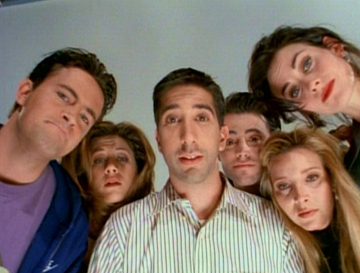
The Rewatch: Friends - Season 1

A metric ton of internet ink has been spilled about Friends over the years. And yet, I'm not sure if the following sentiment has ever been applied to it: Friends is somewhat of a mystery to me. Whether or not you like it, it's established fact that it's one of the most influential sitcoms of all time. If it didn't invent the hangout comedy, it certainly became the standard-bearer. The television landscape is littered with the corpses of shows that tried to copy its success and failed. Everyone I've ever talked to about it either loves it to the point of memorization (no judgment - this is something I've done for another show that will be showing up on the Rewatch) or sniffs at it as cookie-cutter pabulum.

I have a different relationship with it. Every time I ever run across it on TV, I'll sit and watch and laugh. I've actively sought out specific scenes on YouTube to revisit. And yet, if anyone ever asks me about my opinion of it, I give it a shrug. I don't think of it as particularly great in terms of writing or acting. This isn't an active choice, like I'm embarrassed to admit to others that I enjoy the show; in that moment, it never occurs to me that I do. Odd.

I never watched the show religiously when it was on, and the episodes I run across in syndication are jumbled, so it's a new experience for me to watch them in order. But Netflix has just made the series available for streaming, so this is a good opportunity for some research. How do I actually feel about Friends? How has it aged? And why does Ross, the largest Friend, not simply eat the other five?


Rather than going episode by episode, let's just talk about the first season as a whole. It aired in 1994/1995, and "Pilot" is the only episode of the entire series that doesn't start with "The One With..." or "The One Where...", which I'll just refer to as "TOW" from here on out. Speaking of the pilot, it's not great. And I'm not just talking about the wretched fashion and haircuts. But hey, pilots are often not great, so I don't hold that against anyone. It has to introduce all the characters, make the audience familiar with their personality types, and set some stories in motion, all in less than a half-hour. Where the evidence of success is really found is how soon after the pilot a show snaps into the patter that is recognizable as the format everyone grew to love. For Friends, that happens as soon as Episode 2, "TOW the Sonogram at the End". By that point, the writers already felt comfortable making jokes about Monica's fastidiousness, Ross' inability to deal with women, etc. It takes cojones to treat characters as familiar so soon, and it paid off.

Not everything works, of course. Friends occupies that short time in the '90s where television shows could introduce and discuss the issues surrounding gay characters, and still reached for lazy gay panic jokes for a cheap laugh. It's very strange and off-putting to have Chandler talking casually with a gay coworker in one scene, and then have someone chided for extending a hug or holding their wrist a certain way in another. Also, can we talk about Marcel the monkey? What the hell, you guys? No matter how good an episode was otherwise, scenes with Marcel are where comedy went to die (I will allow there was one funny Marcel-related joke, when Rachel says about Marcel's inability to stop humping things, "Let's just say my Curious George doll is no longer curious").

The series (including this first season) was also heavily layered with what I'd call conformist encouragement, not to get all psycho-babbly on you. I just mean that in the world of Friends, everyone's end goal is OBVIOUSLY marriage and children. Ross and Rachel's will-they, won't-they relationship represents the show's highest stakes. All men are assumed to be either working towards monogamous commitment, or just haven't yet discovered that that's what they want. All women are assumed to have biological clocks that go berserk whenever they're around a baby. It's a very 1950s attitude to take, if you think about it.

Notable Guest Stars: The first season establishes some great secondary characters. Christina Pickles and Elliot Gould establish themselves early as the perfect choices to play Ross and Monica's parents. Maggie Wheeler proves immediately why she was so invaluable to the show as Chandler's annoying, on-again, off-again girlfriend Janice. On the other hand, the first season relies too heavily on You May Know Me From Such Places As... guest stars. Here's George Clooney and Noah Wyle as doctors! Get it?!? Here's a well-known model playing a model! GET IT?!? Other notable names to show up include Jennifer Grey, Leah Remini, Jonathan Silverman, and Jon Lovitz (see below).

What's Keeping Ross and Rachel And Their Apparently Greatest Love in the History of the Earth Apart This Time: Mostly Paolo (Cosimo Fusco). Played as a suave, Italian hunk, though his archetype didn't age well. He seems kind of gross from the start, now. He's dealt with when he makes a pass a Phoebe for contrived reasons, and gets dumped.

Best Episode: There are several good ones. "TOW the Birth" is an honorable mention, though it does indulge in some of that weird conformist fetishism mentioned above. "TOW Nana Dies Twice" is also notable. Still, the episode that probably captures the best that Friends could be in their debut season is "TOW Underdog Gets Away", in which Monica attempts to make everyone the traditional Thanksgiving meals of their childhoods, and ruins them all, and Joey is horrified to discover that he's the face of New York City's venereal disease problem.

Worst Episode: Though I like Jon Lovitz, and he does a fine job of playing a guy stoned out of his gourd, "TOW the Stoned Guy" is probably the least successful. Turns out people who are high like to eat a lot. That's the source for about half the jokes in this episode. It's also a Marcel-heavy episode. Ick.

It was very easy to binge-watch this first season. It was comfortable and comforting, and made me laugh out loud more than once. And yet, something about these characters still gets under my skin. So the mystery isn't solved yet. On to Season 2!
0

The Rewatch: Harper's Island

Twitter is not my favorite social media platform. I find it annoying more often than not, but it's become pretty necessary for certain interactions. And once in a while, it manages to redeem itself! For instance, if I weren't on Twitter, I would never have heard through the Horror Honeys grapevine that Harper's Island has been added to the Netflix streaming catalog. Harper's Island was a 2009 murder mystery show on CBS, and promised a gimmick in which at least one of the characters would die in every single episode. The combination of the Ten Little Indians premise with the assumption that its airing on network TV meant that it wouldn't be too gory drew my interest immediately, and I jumped in happily. On first viewing, I thought it was extremely cheesy, often silly, and...a total blast. In fact, it became the only non-reality show I ever recapped/reviewed.

Harper's Island centers on a destination wedding taking place on an island off the coast of Seattle. Seven years ago, the island was the site of a brutal mass slaying, which included the mother of the main wedding guest, Abby. Abby reluctantly agrees to come back to attend the wedding, since the groom is her best friend, but her reappearance kicks off another chain of murders. Since I've already described the show episode-by-episode, I'm not going to do the same here. I just wanted to talk about how the show struck me on the Rewatch, since this time, I was watching with full knowledge of who the killer is. Did I spot anything new? Were there clues that I missed the first time, but picked up on now? Did the ending make sense in hindsight? Is there any fun in watching a whodunnit when there isn't any suspense about, well, who done it?

Let's answer that last question first: Yes! If anything, I enjoyed the show more this time around. It's still a guilty pleasure, but I'm prepared to argue that despite some goofiness and cliche, it's actually a really well-crafted mystery that doesn't (entirely) rely on playing "Gotcha!" with the viewer. On first viewing, I had fun trying to figure out who the killer was. On the Rewatch, I had fun testing the feasibility of the killer's plan. While I did pick up on some nuances I missed the first time around, for the most part, things that puzzled me the first time around still don't entirely make sense. With a lot of brain space once devoted to picking apart the mystery freed up, I was able to focus on characterization a lot more this time. I've got to say, I found it a lot more impressive on the Rewatch. These actors did not phone in their performances, and apart from Madison, who is as stupid and creepy a brat as ever, everyone gets a chance to shine. OK, maybe not Non-Entity Beth, but that's not the actress' fault.

Best Episode (judged in 2009): "Sploosh"
Best Episode (judged in 2014): "Splash"

Worst Episode (judged in 2009): "Sigh"
Worst Episode (judged in 2014): "Seep"

Overall Grade (2009): B+
Overall Grade (2014): A-

Harper's Island didn't get the attention or respect it deserves. For those who like murder mysteries, it's a hearty recommend that people should jump on before the streaming availability expires. For those who have already seen it, I have some questions and comments. So be warned! From here on out, expect some massive SPOILERS.


-For those statistics geeks out there, it took until Episode 8 for me to suspect the actual murderer. And even then, I wasn't sure. Good job covering your tracks, Henry!

-So who killed the deer and left it on Shane's truck with the "PSYCHO" message? Maybe it was JD? That would explain him washing all the blood off his hands, though it seems a little extreme for JD, who tends to act out in less gruesome ways. But by the same token, I don't think Wakefield would have bothered with something that petty.

-Similarly, who left the deer head in Henry and Trish's bathtub? He cleans it up so Trish won't see it, so it couldn't have been him or Wakefield. It seems retaliatory, so did Shane do it? And if so, why leave it in Henry's bathtub and not JD's?

-The psychic tells Trish that a male will both betray and save her. We assumed at the time that she was referring to Richard, and that still seems to be the case, since he saves her from drowning, but it leaves some open questions. How did Richard betray Trish? He betrays the hell out of Sinister Dad and Shea, but nothing he does has any real effect on Trish. Who closed the pool cover on Trish? Henry was lurking around, but he seems genuinely surprised by the situation. Plus, he had plenty of opportunities between the pool incident and Trish's stabbing to kill her, and didn't take them. Richard doesn't have a reason or the temperament to do it, unless he was just trying to give her a good scare. So if it wasn't Henry (who never saved her), and it wasn't Richard (who never betrayed her), what is the psychic talking about?

-It's likely that Wakefield or Henry left the raccoon corpse on the church altar, as it was probably practice for Sinister Dad's eventual murder. The firecracker at the scene leads everybody to suspect JD, though, and the situation is never really cleared up. JD claimed his plan was to put a Roman candle in the Unity candle. OK, so, what's the chain of events here? JD goes to the church and sets up his Roman candle, leaving behind a firecracker by accident. Then Wakefield/Henry comes along and splits a raccoon with the head-spade. Then Henry "discovers" both the raccoon and the firecracker? And reports them? That seems off. Maybe Henry just planted the firecracker to divert suspicion. (And as an aside, too bad that the Unity candle was never lit. Plenty of action takes place in the church afterwards. How cool would it have been for someone to have used the candle as a weapon?)

-At Henry's bachelor party, Richard is entirely unperturbed at his affair with Katherine being discovered. And later, Sinister Dad admits to Trish that his relationship with Katherine is complicated, though he never gets to the reasons why. I can't find it now, but I remember reading something about the backstory on this, which got left on the cutting room floor. Everyone treats Sinister Dad as if he has immense wealth and power, but it turns out that he's essentially broke, and it's actually Katherine who has all the money. This explains how Katherine and Richard don't much care if people find out about the affair, and why Sinister Dad sticks around.

-As I mentioned above, some unexplained things from the first viewing remain mysteries. How did Henry kill the priest if he was busy having sex on his wedding cake at the time? How did he kill Richard if he was busy digging up Wakefield's grave? If Madison was incidental to the murders, why does she act so dumb and suspicious all the time? What's the significance of the red ink in Kelly's eyes? Why did Uncle Marty bring a gun to the island? There are plenty of plot holes like these to be picked at, but none of them so big that they spoiled the show. Hell, maybe I can fill in some of these gaps if I watch it again in another five years! See you then.
0

The Rewatch: Buffy the Vampire Slayer - Season 2

One of the reasons I'm doing a full rewatch of Buffy the Vampire Slayer is that I noticed that when I went back to the show, I was always watching the same four or five episodes over and over. That's too limiting, so I wanted to immerse myself in the entire show, and not just my perceived high points. I worried that subjecting myself to episodes I didn't care for (or about) the first time I saw them would cause me to disengage, and spoil my fondness for the show as a whole. There have certainly been a couple of times that I noticed the upcoming episode title and thought "Ugh, this one." Season 2 is widely regarded as one of the strongest seasons, though, and I was anxious to see if it still lives up to its reputation. The opening credits now include David Boreanaz, and that poor, nameless voiceover guy has been booted in favor of Giles reciting the "In every generation..." introduction. I never liked that introduction. Maybe it'd have been okay for the first few episodes in the first season, but we don't need an omniscient narrator to tell us who Buffy is at the beginning of every episode. Those who have been watching all along already know the background information, and those watching for the first time wouldn't be sufficiently filled in anyway. Just something that mildly irked me. Anyhow, let's dig down into the individual episodes. Those wary of spoilers should wander away now, and go do something productive.

Buffy the Vampire Slayer - Season 2
Big Bad: Spike/Drusilla/Angel

Episode 1: "When She Was Bad"

Even though Buffy dispensed with the Master in Season 1, let's not forget that he did bite her and she did die. You know, briefly. There are naturally going to be repercussions from that, and Season 2 makes the smart choice of opening with Buffy's attempts to deal with her residual fear and hate. Her attempts mostly involve her acting like a complete bitch, to the point that even Cordelia tells her to simmer down. Not that her concerns about the Master are totally unfounded, because the Anointed One has his vamps dig up the Master's skeleton for a plan to resurrect him. Buffy's friends and Miss Calendar are kidnapped for a blood sacrifice for this ritual, so Buffy gets to work out her issues by wreaking violent revenge on the vampire den and bashing the Master's skeleton to dust. This episode was also the closest Xander and Willow ever get to actually kissing, which was strange to watch. It's also an episode I'd generally tell a rewatcher to skip by, because while it makes sense in the overall story arc, it's not super-fun to watch Buffy be sour and mean for half an hour.

Episode 2: "Some Assembly Required"

Standalone episodes are starting to distinguish themselves as both my favorites and my least favorites of the rewatch. While this episode certainly wasn't bad, it is one of those that inspired one of those "Ugh, this one" comments when I saw it coming up. The bodies of Sunnydale High girls killed in a car accident are getting dug up, then hacked up, which points to something other than vampires. It turns out that a couple of advanced science students are building a zombiette with those spare parts - one of the science geeks has reanimated his dead brother, and said brother desperately wants a girlfriend. All they need is a fresh head, and Cordelia is kidnapped to provide it. The rest of the gang saves her, and both zombies go up in flames. Romance also begins to bloom in this episode. Giles and Miss Calendar are getting close, and we get our first glimpse of Cordelia's interest in Xander, as she attempts to thank him for saving her from decapitation. Not that he picks up on it. There's also a little side-plot in which Angel is jealous of the attention Buffy gives other guys, but that's pretty dull. It's a fairly entertaining episode, but pales in comparison to what this show routinely accomplishes in others.

Episode 3: "School Hard"

Introduces: Spike, Drusilla

Like this one! Spike's character certainly goes through its ups and downs over the course of the show, but this is one hell of an introduction. Him and Drusilla blowing into town is what finally kicks Season 2 into gear. Vampires are at the peak of their power on the Night of St. Vigeous, which happens to be the night after Sunnydale High's parent-teacher conferences. Buffy tries to juggle the pressures of school and and slayage, and isn't helped when Spike (who has killed two Slayers in the past) attacks the school a day early. Buffy is almost outmatched, as she's too distracted protecting Joyce and the other civilians to put up much of a fight. Spike didn't count on a Slayer having a support system of friends and family, though, and just as he's about to strike, Joyce wails him in the head with an axe, and he's forced to retreat. We learn that Angel was the one that sired Spike (well, grand-sired through Drusilla), and that Principal Snyder and the police department know everything about the supernatural goings-on in Sunnydale, but cover it all up. And in the best bit, the dour, ritualistic den of vampires is thoroughly shaken up by Spike and Drusilla. They want nothing more than to enjoy themselves, and so Spike kills the Anointed One (or "the Annoying One", as he calls him) and takes over. This episode manages to advance the seasonal arc, develop the backstory about the authority figures in Sunnydale, and still be a load of fun. Definitely a highlight.

Episode 4: "Inca Mummy Girl"

Introduces: Oz, Jonathan Levinson

On a field trip to the local museum, the seal of protection on a mummified Incan princess is broken and she awakens, rejuvenating herself by sucking the life out of others. She poses as an exchange student, and is soon smitten with Xander, as he is with her. Unlike a lot of the "bad guys" on this show, the mummy (Ampata) is more pitiable than evil. Her life was sacrificed as a teenager, a position Buffy is all too familiar with. All Ampata wants is the freedom to live like a normal girl, but she's stuck with the whole needing-to-suck-life-out-of-others method of survival. At the Bronze, we're introduced to Oz, who immediately notices Willow, who's sad about Xander's infatuation with Ampata, who's about to suck the life out of Jonathan (in his first appearance). Ah, teenage life on the Hellmouth! Eventually, the gang discovers Ampata's true nature, and stops her from sucking Willow's life out. Ampata crumbles back to dust, but it's a hollow victory; everyone realizes that she really got a raw deal. It's episodes like this that make the rewatch worth the time. I recalled this episode as being kind of blah, but in retrospect, it's not only more important than I remember, it's more entertaining. Also, for those who keep track of such things, this is the fifth of eight series episodes not to show a single vampire.

Episode 5: "Reptile Boy"

I never noticed the episode name symmetry between this and "Inca Mummy Girl". Clever! Unfortunately, that's about the only clever thing about this episode. Buffy, fed up with the pressure from Giles about her duty and Angel's maddening habit of keeping his distance (since he's a vampire, and oh yeah, about 230 years older than her), sneaks off to a fraternity party with Cordelia. But because this is Sunnydale, it's not just a normal frat house full of boozy date rapists. Nope, this one is full of boozy date rapists who also happen to worship a giant snake demon that lives in the basement. The demon provides wealth and power to the frat guys' families in exchange for sacrificing nubile young ladies. Xander's trademark jealousy makes an unwelcome appearance, and Willow finally stands up for herself (well, her friend), as she tears into Giles and Angel for giving Buffy such a hard time. Buffy and Cordelia are drugged and taken to the sacrificial chamber (along with a before-she-was-sort-of-famous Jordana Spiro), but naturally, Buffy is able to break her chains and kill the snake demon. The frat guys are arrested, their families lose their clout, and both Giles and Angel promise to ease up on Buffy. And that's about it. While none of the episodes in Season 2 are out-and-out bad, this one is the very essence of skippable.

Episode 6: "Halloween"

Introduces: Ethan Rayne, Larry Blaisdell

I'm a guy who loves a well-executed gimmick. "Halloween" runs along similar lines as "Nightmares" did in Season 1, and is just as awesome. Principal Snyder forces Buffy, Xander, and Willow to volunteer to take kids trick-or-treating, so they all stock up at a costume shop run by the charming Ethan Rayne. Trouble lurks beneath that charm, though. Ethan worships chaos, and has imbued his costumes with a magical property that will turn the wearer into the actual costume persona. Xander turns into a special forces military grunt. Willow covers up some sultry clothes that actually flatter her with a ghost sheet, and drops dead, emerging as a phantom. And Buffy, upset that Angel has had a century's worth of old-fashioned ladylike types to pick from, has dressed up in a hoopskirt and petticoat, and morphs into a simpering, idiotic noblewoman.


Naturally, the town goes nuts, cause there are bunch of kids that have suddenly turned into demons. Spike is delighted by all this madness, not least of which because Buffy is now entirely helpless. Giles goes to confront Ethan, who he used to pal around with (Ethan refers to Giles as "Ripper", hinting at their mysterious past together). Giles manages to break the spell in time for Buffy to recover and kick Spike's ass, and here's where I'd usually say everything goes back to normal. But it doesn't. Cordelia learns that Angel is a vampire. Angel tells Buffy that he never liked those insipid 19th century women, and the two of them kiss, their romance blossoming anew. Willow gains self-confidence from effectively leading the gang through this latest crisis, and Oz's interest in her climbs even higher. We're also introduced to Larry, who is just a garden-variety lout and bully in this episode, but who would be put to better use later in the series. An outstanding episode from beginning to end.

Episode 7: "Lie to Me"

Where "Halloween" indulges in a lot of jokey fun, "Lie to Me" is a lot more serious. Buffy sees Angel talking with Drusilla, and learns about how he mentally tortured her into insanity before siring her. She also reconnects with Ford, a student she knew back in her Los Angeles days. Angel immediately smells a rat, and though Willow tries to convince him he's just jealous of Buffy spending time with a human boy, she reluctantly agrees to check him out. There is a lot kind of off about Ford, especially since he tells Buffy he knows she's the Slayer, and the second her back is turned, spares a vampire in exchange for information. It seems Ford belongs to a group of vampire admirers who wish to be turned. Most of them are run-of-the-mill morons, and Ford has agreed to sacrifice them to Spike and his cronies in exchange for immortality. He's rapidly dying of cancer, and vampirism is his ticket out. Buffy discovers this plan, and is unable to dissuade him from it. When the vampires attack the wannabe club, she threatens to stake Drusilla unless Spike lets everyone go. Ford stays behind, and insists that Spike hold up his end of the deal. At the episode's conclusion, Buffy and Giles have a sober discussion of morality, and how it's often difficult to tell the difference between heroes and villains. Ford's intentions may be understandable, but he's still a vampire now, and Buffy stakes him the minute he rises from the grave. Although this is the episode that Angel and Buffy declare that they are, in fact, in love, nobody walks away from this week's adventure happy.

Episode 8: "The Dark Age"

Remember Giles' mysterious backstory that was alluded to in "Halloween"? Here's where it erupts. Back when he was "Ripper", Giles and his gang of pals used to dabble in the dark arts, playing around with a demon named Eyghon who possesses dead or unconscious hosts. Now Eyghon is back, and is systematically killing members of Giles' old crew by possessing the body of the victim to murder the next one. A scuffle with one of these possessed corpses knocks out Miss Calendar, and the demon leaps into her body. Ethan Rayne is next on the demon's to-kill list, so Ethan attempts to escape notice by burning off his demon mark tattoo with acid, and by serving up Buffy as bait. When the demonic Miss Calendar attacks, Angel saves the day by choking her until the demon moves to the next dead/unconscious person in the room - Angel himself. His vampire essence and the demon essence battle it out within him, and the vampire emerges victorious. Ethan escapes into the night again, and while Miss Calendar is saved, her relationship with Giles is severely damaged. It's a fairly good episode, and a handy lesson for Buffy, who has viewed Giles as stuffily perfect up to this point. Now she must confront the fact that he's human, and just as capable of making dangerous mistakes as anyone else. While the plot-driven standalone episodes can go for broke on pure entertainment, it's these well-developed character beats that really make Buffy such a well-regarded show, and this episode is a perfect example of that.

Episode 9: "What's My Line? - Part 1"

Introduces: Kendra Young, Willy the Snitch

Mark it! This episode is the first time that Buffy and her crew are referred to as the Scooby Gang. I've been studiously avoiding that terminology up until now, and it's so freeing to be able to finally deploy it. And you know some serious shit is about to go down in a Buffy episode if there's a "Part 1" attached to the name. And not just because this episode is where Willow and Oz officially meet for the first time. Career Day comes to Sunnydale High, so of course Buffy is bummed that she doesn't have more choices in her life, and that her destiny is already laid out before her. Part of that destiny is dealing with an order of assassins that Spike contracts with to deal with Buffy while he works on a cure for Drusilla's illness. These killers can be anyone, from human to vampire to demon, and Buffy gets beset by wildly different assailants. A mysterious girl that we assume to be one of the assassins witnesses Buffy and Angel kissing, and attacks Angel when he goes to get info out of Willy the Snitch. She locks him in a cage that will soon be bathed in sunlight, and goes to attack Buffy as well. The two fight for a while, and just when we expect to learn more about the assassin group's methods or motives, we find out that the girl trying to bring Buffy down is Kendra... The Vampire Slayer.

Episode 10: "What's My Line? - Part 2"

What, what, what? But it's been drilled into both the audience and the characters that there can be only one Slayer in all the world (a supposition that carries its own issues, but whatever). How can Kendra be a Slayer? Well, she was called when Buffy briefly died in "Prophecy Girl". OK, then why did she attack Buffy? It's because she saw her kiss Angel in his vampire form and assumed Buffy was an enemy, too. OK, then why is she in Sunnydale at all? Because a dark power is about to rise. OK, then what now? Oh. That whole Angel-about-to-be-dusted-by-sunlight thing. Angel has actually been saved by Willy the Snitch, then immediately delivered to Spike so he can be killed in a ritual that will restore Drusilla's health. Not enough of an exposition dump? OK, one of the assassins (whose body is made up of a seething mass of worms - ick) has cornered Xander and Cordelia, and in their imperiled position, they kiss for the first time. Oz saves Willow from being shot by another assassin. Kendra and Giles bond, and Buffy considers giving up the slaying gig and letting Kendra take over full time. It all culminates in the restoration ritual, in which Kendra and Buffy save Angel and kick Spike's ass so hard that he's essentially crippled, but enough of the ritual has been completed that Drusilla returns to full strength. With Spike disabled and the worm assassin ground to paste, the assassin contract is canceled, and Kendra is free to return to her watcher. Though the Scooby Gang has been working well as a group for a while now, this remarkable pair of episodes is what really solidifies them into a team, and teaches Buffy that despite what the Slayer Lore has been up to this point, she is not alone.

Episode 11: "Ted"

Any standalone episode coming after the one-two punch of "What's My Line?" is going to suffer by comparison. Spike and Drusilla are thought to be defeated, the order of assassins has been called off, and everything seems to be as normal as it ever gets. John Ritter guest stars as the titular new man in Joyce's life, and immediately rubs Buffy the wrong way. He's outwardly pleasant and generous, but he's got a rigid code of rules, and when Buffy breaks them, he slaps her across the face. Buffy wants her mother to be happy, so she attempts to make nice with Ted. It isn't long before the conflict flares up again, and Buffy winds up causing Ted to fall down the stairs, where he is pronounced dead. Buffy must then deal with both the guilt of using her super-strength against a normal person, and the utter devastation she's brought down on Joyce. No worries, though. Ted turns out to be a robot who serially marries women, then kills them when they don't conform to his programmed ideal of a Leave it to Beaver type of family. There are a couple of things to admire about this episode. It's one of the few that involves very few supernatural elements, and drives home the idea of what it must be like for a Slayer to deal with banal things like routine police investigations and unwelcome stepfather candidates. Joyce has often been treated like background, but this episode gives us a sense of what it must be like to live with Buffy and not know about her double life. Aside from that, though, it's not a terribly engaging episode. Ritter does a fine job, but doesn't distinguish himself on the level Clea DuVall did in "Out of Mind, Out of Sight". Ah, well. At least Joyce's hair looks way better now.

Episode 12: "Bad Eggs"

Introduces: Lyle Gorch

Xander and Cordy continue their secret relationship, while Buffy gets lectures on responsibility from Joyce. Further responsibility is loaded onto her shoulders when the school's Health class gives all the students eggs to take care of as surrogate children (my school did this too, with stuffed animals). Because this is the Buffyverse, these are no harmless chicken eggs. They belong to a Bezoar, and the hatchlings burrow into a host, taking over their brains. Joyce, Giles, Willow, Cordelia, Jonathan, and a bunch of others are enslaved, and toil in the basement, pulling eggs out of the Mother Bezoar and preparing them for shipment all over the world. Buffy, who has been distracted by fighting a pair of cowboy brother vampires named Lyle and Tector Gorch, works with Xander to fake their way to the Bezoar lair in the school's basement. The Gorches attack, but what are vampire/human squabbles when there's a monster nearby that's happy to kill anyone not under her thrall? Tector is eaten, and Buffy is pulled to the monster's maw, but is able to kill it with a pickaxe she grabs along the way. With the Mother Bezoar dead, the affected people come to their senses, as does Lyle, who figures picking a fight with the Slayer is a bad idea, and runs away. A reawakened Joyce grounds Buffy for not having enough of a sense of responsibility (irony!), but Angel still manages to get smooches through Buffy's bedroom window. This is another of those episodes that I rarely choose to revisit, but was far better than I expected it to be on the rewatch.

Episode 13: "Surprise"

And, we're back into the serious season arc advancement. Speaking of surprises, it's strange that we'd get another two-episode storyline so soon after "What's My Line?", but "Surprise" and "Innocence" are executed so well that nobody seemed to mind. These episodes pop up on a lot of Best Of Buffy lists, and while I enjoy them a lot, I'm not as into them this time around. In "Surprise", Buffy has a dream in which a fully-recovered Drusilla kills Angel. She worries that it's prophetic, but at least she has a heads-up that Spike and Drusilla are still alive (though Spike is confined to a wheelchair - let's just not worry about how vampiric paralysis works). Indeed, the evil couple is hard at work on assembling the pieces of a monstrous Judge, a demon who the lore describes as invincible to any weapons forged by man. Meanwhile, Oz and Willow arrange their first date to be Buffy's birthday party, Miss Calendar's uncle stops by to reveal that she's part of the Gypsy clan tasked with making sure Angel stays miserable, and Angel gives Buffy a claddagh ring as a token of his love. Oz witnesses Buffy dust a vampire, and is accepted as part of the Scooby Gang with minimal fuss. Although Miss Calendar does her best to send Angel away on a quest to keep a vital piece of the Judge safe, the mission fails, and Buffy and Angel are captured by Spike and Drusilla. They manage to escape before the reanimated Judge can kill them, and seek refuge in Angel's lair, where they have sex for the first time. Buffy falls asleep, and in a crash of thunder and lightning, Angel runs out into a storm, screaming her name. Uh, oh. Something bad is afoot. This was an extremely important episode in terms of series significance, and it's very well done (I particularly like how nonchalant Oz is about the whole world of supernatural forces suddenly being apparent to him). It would definitely be a requisite episode for any discussion of Buffy as a whole, but in terms of pure entertainment value in a rewatch, it doesn't have as much punch.

Episode 14: "Innocence"

"Innocence" has the distinction of being the highest-rated Buffy episode of the entire series. It's not difficult to see why, as it's clearly the turning point of the season. Sleeping with Buffy has brought Angel a moment of "true happiness", which according to the curse he's been given, causes his reclaimed soul to once again depart his body. His humanity gone, Angel is now back to being Angelus, a full-fledged evil vampire. And he is not happy with the memory of being Buffy's compliant boyfriend. In the interstitial plotline, Willow discovers the relationship between Xander and Cordelia, and is devastated that Xander would rather date someone he professes to despise over Willow, who has been obviously in love with him since childhood. But back to the main thread. The newly-evil Angelus, in addition to killing prostitutes and other fun activities to show he's truly bad now, takes the Judge to the nearest mall with Drusilla in order to start wreaking a little havoc. Fortunately, though, the Scooby Gang has two tricks up their sleeves. One is that everyone still remembers everything they went through on Halloween, so Xander retains his military knowledge. And two, that whole Judge-can't-be-killed-by-any-weapon-forged-by-man rule was written before things like...oh, say...rocket-propelled grenade launchers were invented. The "Oh, shit!" faces that dawn on Angelus and Drusilla two seconds before Buffy blows the Judge to smithereens is a thing of beauty. Buffy is having understandable trouble letting go of her idea of who Angel is now, and can't bring herself to kill him yet. That doesn't preclude her from giving him a good kick in the balls, though. As with "Surprise", it's a masterfully-crafted episode, and as with "Surprise", it's more important as canon than entertainment.

Episode 15: "Phases"

As I said in "The Pack", Buffy often used supernatural stories as an allegory to examine social issues, and this one is a good exploration of gender politics. A werewolf is terrorizing Sunnydale, and though it hasn't killed any people yet, it's obviously a concern. And unlike being able to dust vampires with a clear conscience, the gang doesn't want to kill a monster that is a normal person 27 days out of the month. That is not a moral quandary that troubles a werewolf hunter that has come to town, so Buffy is in the odd position of having to both capture and protect the beast. Meanwhile, Willow is dropping heavy hints to Oz that she wants their relationship to progress, Larry sexually harasses the female student body, and Angel stalks and murders Theresa, a helpless classmate of Buffy's. All of these seemingly disparate storylines are woven together - everyone assumes Larry is the werewolf and that he killed Theresa, but both of those misconceptions are cleared up when Theresa rises as a vampire and Oz morphs into the werewolf. Larry's big secret is not that he's a lycanthrope, but that he's gay and deeply closeted. His relief upon coming out to Xander (who he suspects is a fellow dude-admirer) helps him make the change to becoming a better person. Willow accepts Oz for his wolfish leanings, ribbing him that she's no fun a few days out of the month, either. Both his and Larry's self-acceptance, along with the werewolf hunter's insistence that tracking wolves is no business for a pert little blonde like Buffy makes for interesting interactions about what it means to be a man or a woman, and also makes for a pretty fun episode.

Episode 16: "Bewitched, Bothered, and Bewildered"

Up there in "Some Assembly Required", I said that standalone episodes are fast becoming both my favorites and my least favorites of the rewatch. "Bewitched, Bothered, and Bewildered" is a textbook example of that, but unlike "Some Assembly Required", this one is on the great end of the spectrum. I adore this episode. Cordelia dumps Xander because she finds herself suddenly unpopular for dating a loser. Xander displays his trademark overreaction and jealousy by blackmailing Amy (who's taken up the witchcraft mantle from her mother) into whipping up a love spell that will make Cordelia fall helplessly in love with him. There's just one tiny problem. The spell actually affects every female in town except Cordelia. That includes Amy, Buffy, Joyce, Willow, Miss Calendar... You name it. Girls being crazy in love with you sounds fun, until you focus on that "crazy" part. Buffy punches Amy. Amy turns Buffy into a rat. Harmony attacks Cordelia. Willow grabs an axe. In a fantastic scene, a murderous Angel snags Xander, and just when it's looking bleakest, Xander is saved by a love-struck Drusilla. Giles is able to break the spell with a reluctant Amy's help, and though everyone else is furious with Xander, Cordelia appreciates his protection during the hysteria, and she announces to her social-climbing friends that she'll date whoever she damn well pleases, no matter how lame he is. Episodes that allow the cast to stretch their wings by acting in ways that are polar opposite to their usual characteristics can be grand fun, and if I'm ever in the mood to watch a single Buffy episode, this one always makes the short list.


Episode 17: "Passion"

Sure, Angel killed Theresa and that one hooker, but Joss Whedon had the not-unreasonable concern that viewers still considered him to just be kind of grouchy, instead of a soulless monster. "Passion" sure takes care of that. But first, we learn all sorts of interesting things. For instance, there's a spell that revokes any existing vampire invitation, so now Angel can't stroll into Buffy's house anymore. Whew. Also, Miss Calendar is able to fill in the gaps of the ancient ritual used to restore the soul to a vampire's body. She downloads the completed ritual onto a computer disk, but Angel is onto her, and he attacks her before she can leave the school. Sure, we've seen that Buffy has real stakes (no pun intended), but when Angel snaps Miss Calendar's neck, it still comes as a genuine shock, even if you know it's coming. Angel arranges Miss Calendar's body in Giles' bed, so that he will discover it in the most horrific way imaginable, and watches with pleasure as Buffy and Willow receive the news. A shattered Giles marches off to get some ill-conceived revenge, and though Buffy is able to rescue him, she loses her opportunity to dispose of Angel. She's now more than ready to do what must be done, though, and as Willow takes over Miss Calendar's classes, the forgotten computer disk that contains the secret to restoring Angel's soul falls off the desk into a narrow crevice. It's an incredibly tense, thrilling episode, and cements once and for all how far this show was willing to go.

Episode 18: "Killed by Death"

Well, they can't all be gems. So far, I've been pleasantly surprised by the standalone episodes I wasn't particularly looking forward to, but "Killed By Death" lived down to its reputation. Buffy lands in the hospital with a serious case of flu, and begins dreaming of a demon that sucks the life out of ill children. Despite facing death and pain on a daily basis as the Slayer, the writers contrive to have Buffy be averse to hospitals, because she witnessed her favorite cousin die in one as a child. Angel drops by to be menacing, but it's pretty useless. It turns out the dream demon is all too real, but is only visible to the sick. A recovering Buffy realizes that this must be the entity that killed her cousin, and intentionally makes herself weak again so she can confront it. She kills it, the sick children are happy, and... That's it. Even "Reptile Boy", which wasn't a terrific episode, managed to have some suspense and humor. This episode just lands with a thud.

Episode 19: "I Only Have Eyes For You"

This one's concept had the potential to land with an equally dull thud, but some thoughtful writing and plotting make it very enjoyable. The annual Sadie Hawkins dance at Sunnydale High stirs up the ghosts of a teacher and student who had an affair in 1955. Despite loving the student, the teacher attempted to call off the affair, and the devastated teen winds up shooting her, then committing suicide. In the present, the two spirits begins possessing others, and reliving their doomed final night, with violent results for the hosts. Buffy, confident that she can handle an attack by an emotional civilian, goes to the school. Angel finds her there, but before he can attack, they're both possessed. In a clever twist, the violent male student takes Buffy's body, while the distraught teacher enters Angel. When Buffy shoots Angel, he survives (bullets don't do the job against vampires), and so the two spirits are able to talk out their feelings, and finally achieve closure. They depart for good, and a freaked-out Angel momentarily loses his killing mojo, running away to find comfort in Drusilla. He and Drusilla go out to cleanse their palates with a good kill, and we close out on a reveal that Spike is all healed now, and is in the mood for a little revenge against Angel snaking his woman (and let's face it, being kind of a dick to Spike in general lately). There are a couple of other interesting notes about this one. The guest star casting is pretty remarkable, with Christopher Gorham (Ugly Betty, Harper's Island) as the murderous student and Oscar-nominee John Hawkes as a janitor that gets possessed by him. Also, this episode marks the first mention of "The Mayor", a name that causes a lot of uncomfortable shifting for Principal Snyder and the police department. That was some nice, subtle foreshadowing. This isn't an episode that springs to my mind a lot, but it should. It's a good example of how great Buffy was at presenting self-contained stories without going overboard on the supernatural elements.

Episode 20: "Go Fish"

Hey, this one had some notable guests, too! Wentworth Miller (Prison Break) is a snotty member of Sunnydale's swim team, and Hey-It's-That-Guy Conchata Ferrell is the conspiratorial school nurse. This was another of the "Ugh, this one," episodes that turned out to be better than I remember. It's got some good banter to it. Sunnydale's swim team are the celebrities du jour, and though they're riding high on a wave of admiration and power, a monster appears to be attacking and eating them - all but the skin (Xander: "The skin's the best part!"). Angel manages to corner one of the swimmers as well, but can't stomach his blood. All signs point to something being introduced into their systems, so Xander goes undercover as a member of the team. It turns out that the coach and nurse have stumbled across Soviet DNA experiments that are turning the swimmers into fishy monsters the coach keeps in the sewer to serve as a championship-winning team. Oh, THAT old saw. The nurse gets eaten, and the insane coach throws Buffy to the monsters as a mate. Ew. Xander saves her, and the coach is killed by his own creations before they find their way out to the open ocean where they can live (happily?) ever after. Though this episode was better than I expected on the rewatch, it doesn't stack up very well against the rest of the season as a whole. It's still skippable, but thankfully, not awful.

Episode 21: "Becoming - Part 1"

Having multiple two-episode arcs in a single season is risky, but it's understandable why "Becoming" needed more than a single episode to wrap up the season, because this finale packs a wallop. Part 1 shifts back and forth in time to explore how the characters got to this point, "this point" being a fresh new apocalypse to worry about. Scenes in the past include Darla siring Angel (Ireland - 1753), Angel tormenting and siring Drusilla (England - 1860), Angel getting his soul restored (Romania - 1898), Angel meeting Whistler, a neutral demon who is tasked with maintaining balance between good and evil (New York - 1996), and Buffy being informed that she is the new Slayer (Los Angeles - 1996). In the present, a stone block is taken to the museum. The block is the solidified form of the demon Acathla, who will swallow the world into Hell if awakened. And guess what Angel wants to do? More? You want more? Sure! Buffy and Willow find the disk with the ritual that will restore Angel's soul. Kendra comes back to Sunnydale with a weapon that should be effective against Acathla, hopefully. Angel and Drusilla acquire Acathla, and then Angel lures Buffy away from the school so that Drusilla can attack. Giles is kidnapped, Willow is knocked out before she can complete the soul-restoration ritual, and Drusilla kills Kendra. And then Buffy gets back, is seen by the police standing over Kendra's corpse, and must run away before she gets arrested. Aside from David Boreanaz's laughable attempt at an Irish accent, it's an incredible episode, and puts me on the edge of my seat every time I watch it. And that's only half of the story!

Episode 22: "Becoming - Part 2"

The police are hunting Buffy (oh, and Principal Snyder expels her), Willow is in a coma, and Angel is torturing Giles for information about how to wake Acathla, so our heroes don't begin this week in a promising situation. After a brief chat with Whistler, Buffy is nearly captured by the police, but is saved by Spike, of all people. He makes the apt argument that just because he's a blood-sucking vampire, it doesn't mean he wants the world to end. He rather likes the world, what with all those tasty people walking around. The two of them strike up a tenuous alliance, with Spike agreeing to help stop Acathla if he and Drusilla are allowed to leave town. They head back to Buffy's house, where Joyce arrives just in time to see Buffy dust a vamp. Yup, the secret's out, and Buffy spills as much info about her role as the chosen one as she has time for - that is to say, not much. Joyce is understandably confused and upset, but even her panic and threats isn't enough to stop Buffy from leaving to go face Angel. Willow wakes up and wants to reattempt the soul-restoration curse, sending Xander to tell Buffy to stall until she can get it done. Xander, however, doesn't want Angel to survive, and lies in order to encourage Buffy to kill him. Drusilla tricks Giles into giving up the secret to waking Acathla, who begins to stir just as Buffy arrives. She and Spike square off against Angel and Drusilla, and after some initial setbacks, Buffy gets the upper hand. Having made good on his promise, Spike knocks Drusilla out and carries her off. Just as Buffy is about to strike the killing blow, Willow's curse kicks in, and Angel's soul is restored. Buffy recognizes this, but it's too late, as Acathla's mouth opens and a whirling vortex emerges. The only way to save the world is by skewering Angel into Acathla with the sword, and after telling him she loves him and giving him a final kiss, she stabs him and sends him to Hell. The apocalypse is averted, but after everything Buffy has been through, she doesn't feel like she can resume her normal life. She boards a bus out of town, and we end the season on Sunnydale losing its Slayer.

Summary

Once I was done rewatching Season 2, it was easy to see why it's considered so highly, because it is, in a word, awesome. The cast has fully gelled into a terrific ensemble, and the vast majority of episodes work on either a level of cleverness, emotion, or both. There's a seasonal arc, but the show doesn't crawl up its own ass in terms of mythology. There's plenty of levity, there's plenty of pathos, and neither one ever outweighs the other too much. Season 3 was also considered a series highlight, so I'm looking forward to seeing how it compares to my memory on the rewatch. In the meantime, let's do some ranking for Season 2:

Best Episode: Oof. This is a really tough choice. There are plenty of episodes that could arguably be my top choice on any given day. In trying to balance good storytelling, a smart blend of comedy and drama, and pure fun, I think I'm going to go with the two-episode arc of "What's My Line?"

Worst Episode: "Killed By Death"

Must-Watch: "School Hard", "Inca Mummy Girl", "Halloween", "Bewitched, Bothered, and Bewildered", "Passion", "Becoming" (These are "Musts" from a rewatch perspective - they may not fill newbies in on the plot, but they're the most enjoyable.)

Free-to-Skip: "When She Was Bad", "Some Assembly Required", "Reptile Boy", "Ted", "Go Fish" (Converse here. Skippable episodes may be very important from a story perspective, but struck me as weak, entertainment-wise.)
0

The Rewatch: Buffy the Vampire Slayer - Season 1

All of the shows I've been posting about lately are either shows I'd never seen before, new seasons of favorite shows, or completely brand new shows. That's all well and good, but I thought there should be a category for shows that I've sat through at least once, and want to revisit (in their entirety, if possible). And lo, the Rewatch was born! No surprises lurk here; I already know exactly what's coming up, what happens to the characters, and how long the show will last. Lots of shows are still plenty entertaining the second (third, twelfth...) time through, but not every episode can be a home run. I was curious to know what I'd catch on a repeat viewing, if my attitude towards certain characters has changed, and which episodes really rise to the top.

First up on "The Rewatch" is Buffy the Vampire Slayer, a show that had a lot of ups and downs over its seven seasons. When it was good, nothing else on the air at the time could match it. When it was bad, you'd wonder if television characters could ever be this annoying again. The show had plenty of standalone episodes, and plenty that advanced a seasonal arc, usually revolving around the particular villain (or "Big Bad" in the show's parlance) threatening our intrepid Slayer and her gang of Slayerettes. Oh, and the world. Shall we dive in? Obviously, there are massive spoilers ahead.


Buffy the Vampire Slayer - Season 1
Big Bad: The Master


Episode 1: "Welcome to the Hellmouth"

Introduces: Buffy Summers, Rupert Giles, Xander Harris, Willow Rosenberg, Cordelia Chase, Angel, Joyce Summers, The Master, Principal Flutie, Darla

It takes balls to kick off your brand new series with a two-parter. In this first hour, Buffy arrives in Sunnydale and we meet the whole gang. Buffy isn't thrilled to leap back into slaying, since it led to such trouble in Los Angeles, but between Giles' nagging and a warning from the mysterious Angel about the Hellmouth under her feet, she reluctantly takes up her stake. I'd almost forgotten about Principal Flutie, since Principal Snyder was much more of a presence, but it tickled me to get reacquainted with this you-can't-spell-principal-without-PAL kinda guy. The episode thankfully doesn't waste much time bringing Xander and Willow into the supernatural fold, as Xander overhears Buffy discussing vampires with Giles, and Willow is attacked by one. And of course, who doesn't get a kick out of the bitchy Original Recipe Cordelia? Original Recipe Joyce is a lot more forgettable. They really had no idea what to do with her at first, did they? Naturally, there's a lot of exposition which comes across as padding on a rewatch, but all in all, this isn't a half-bad introduction to the series. The Master is awakened and sends his acolytes out to get some blood, and the episode ends as his main henchman corners Buffy in a crypt and goes in for the kill.

Episode 2: "The Harvest"

Introduces: Harmony Kendall

We pick up with Buffy escaping Luke (the main vampire henchman) via a silver cross that Angel gave her, and then it's back into exposition as she and Giles give Xander and Willow an introductory lesson in Slayer lore. This is the moment Willow happily slides into her role as researcher/computer whiz, a position she will occupy for several seasons. Buffy makes an effort to save Xander's friend Jesse from the vampires, but finds that he's already been turned, and has been used as bait to lure her to the Master's lair. She escapes with Xander's help, and Giles informs the group that during the titular Harvest, the energy from anyone that Luke drinks will be transferred to the Master. Luke, Darla, Jesse, and some other vampires attack the Bronze, and in a rather anticlimactic fight, Buffy dusts Luke and Xander accidentally stakes Jesse. This was another important episode for establishing the show's universe, but for rewatchers who already know the backstory, it doesn't really distinguish itself.

Episode 3: "Witch"

Introduces: Amy Madison

The first standalone episode of the series, and one that I really enjoy. Buffy continues her efforts to live as normal a life as possible by trying out for the cheerleading squad, alongside Cordelia and Amy Madison. Elizabeth Anne Allen does a great job as Amy, and I'm chuffed that a character who could easily be written off in one episode was later rewoven into the series. A series of mysterious calamities befall the cheerleaders, from spontaneous combustion to mouth removal, which bumps the rejected Buffy and Amy up the list. Buffy manages to save Cordelia yet again after the latter is struck temporarily blind. Giles figures out that a vengeful witch is at work, and Amy is the top suspect. Buffy, already established as the leader, is rendered useless by a spell, so Willow, Xander, and Giles must take point on putting a stop to the mayhem. Joyce is finally put to good use, as the episode trades heavily in the often-fraught relationships between mother and daughter. Amy's mother is the real witch, you see, and swaps bodies with her daughter to recapture her past glories. Working together, the gang (plus Amy) is able to fight back, and Catherine Madison's final spell is reflected back onto her. This leads to one of the coolest episode enders of the series, as we see her imprisoned forever in the cheerleading trophy that bears her name.


Episode 4: "Teacher's Pet"

Another standalone episode, but this one is not half as good, in my opinion. Xander (along with the rest of the male student body) is smitten by Ms. French, the substitute biology teacher. What they don't realize is that she's kind of...a giant praying mantis. For some reason, her being a big insect terrifies the entire vampire populace. Her goal is to kidnap male virgins and have them fertilize her eggs. How this works biologically is never explored, but whatever. Angel is shoehorned into the episode to offer a cryptic warning, but serves no useful purpose. Xander and another student are imprisoned in Ms. French's basement dungeon, and are eventually rescued by Buffy, Willow, and Giles. Though Ms. French and her main cluster of eggs are hacked to death, the episode closes on a hatching egg cache at the school that our heroes missed. This isn't a wholly unenjoyable episode, but it is wholly unnecessary.

Episode 5: "Never Kill A Boy on the First Date"

Introduces: The Anointed One

The quest for normalcy continues! Buffy just wants to have a normal date with a normal boy (Owen), but slayage keeps getting in her way. Stupid Hellmouth! The Master tells of a prophecy in which the Anointed One will lead the Slayer to her doom. Giles is aware of the prophecy too, and when a charter bus is attacked by vampires, Buffy has to investigate the funeral home, dragging the confused Owen along. Xander, who's had a crush on Buffy since the series began, exhibits what is going to become his trademark jealousy that gets him in trouble before too long. Cordelia, Angel, Giles are also not thrilled with Buffy's new beau, all for different reasons. After Buffy roasts a vamp that attacked Owen, she realizes that although he's totally into the Danger Girlfriend, any relationship with him will likely end in his death, and she calls it off. The gang takes comfort in the fact that at least they were able to slay the Anointed One, not realizing their target wasn't the burly, tattooed religious weirdo that just got smoked, but the sweet-faced kid, who goes and joins the Master in his lair. This was a good episode in terms of balancing Buffy's desire to be a regular teen with her status as the Chosen One. It's a shame we'll never see Owen again; it would have been interesting to run into him later down the line after Buffy has gone through so much more.

Episode 6: "The Pack"

This would have been an isolated standalone episode, but for being the first instance of Buffy establishing its universe's stakes by killing off a (semi) main character. True, more important people will meet their ends as the seasons progress, but this was the first time the victim isn't an extra. First things first, though. Sunnydale High students go to the zoo, and whilst there, a group of bullies gets possessed with the spirit of demon hyenas. Xander, who's there to protect a weaker student from the bullies' harassment, also gets infected. He and the bullies all begin to get meaner and more predatory. At first, this is just shown through the lens of high school cruelty, from vicious insults to dodgeball attacks. Poor Willow gets the brunt of it from Xander, who is not only supposed to be her best friend, but who she's had a crush on since childhood. This is the first episode that Alyson Hannigan got to shine in an emotional breakdown scene; it certainly won't be the last, as she completely crushes every single one. Xander and the bullies get more feral, and wind up eating the school mascot (a pig). As Buffy and the gang attempt to deal with Xander, Principal Flutie calls the gang of bullies into his office for a good talking to. And... Well, goodbye, Principal Flutie (*buuuuuuurp*). The zookeeper turns out to be behind the possession, and attacks Willow to gain the power for himself - leeching it out of Xander and the bullies. It doesn't last long, as in the ensuing fight, he's knocked into the hyena enclosure, where he is eaten. Buffy often used supernatural stories as an allegory to examine social issues, but this episode's treatment of high school bullying was kind of weak. The bullies run off, and never get punished, while Xander feigns memory loss about the whole incident. Although this episode was cool in that it begins to reveal how far this show is willing to go, its main storyline lands with a thud.

Episode 7: "Angel"

So long, standalones! It's time to seriously advance the season's arc. The Master sends a group of vampires known as the Three after Buffy, and Angel helps her fight them off. The two of them begin to get closer and closer, and Buffy invites him to stay at her house. They kiss, and as Angel pulls away, his vampire face is revealed. Dun dun duuuuuuun! Buffy is horrified, and Angel vanishes into the night. Later, through Giles' research, we learn that Angel used to be a vicious killer (Angelus), but has not preyed on humans for years. Darla kills the Three at the behest of the Master, and asks for permission to take on Buffy as well. She cons her way into the Summers home, where she bites Joyce. Angel arrives and goes into vamp face, just in time for Buffy to come home and misconstrue what happened. Joyce recovers (meeting Giles for the first time in the hospital), and everyone else winds up at the Bronze for the big fight. Darla eschews traditional vampire attacks, and tries to gun Buffy down, while revealing that she was the one who sired Angel (that is, she turned him). Although Angel has had a bond beyond closeness with Darla for hundreds of years, he can't bear to see Buffy killed, and stakes Darla into dust. Now that everyone is safe, he explains his background - he once fed on a Gypsy girl, and as punishment, her clan put a curse on him, restoring his soul. He's still a vampire, but his conscience and morality have come roaring back, so he hasn't killed or fed on a living person since. He and Buffy realize that a relationship between them would never work, but they can't resist sharing one last kiss. Although it's not one of my favorites, I have to admit this was a pretty powerful episode, and I'm saying that as someone who never had much use for Angel.

Episode 8: "I Robot... You, Jane"

Introduces: Jenny Calendar

And then there's this. When I ranked the episodes of Season 1, picking the best required some contemplation. Picking the worst was simplicity itself. It's this one, dummy. While "Teacher's Pet" is kind of an ignorable episode, it was at least fun to watch. "I, Robot..." is just dumb. There is an ancient demon named Moloch who influences followers into willingly dying at his feet. A group of monks trap his spirit into a book, and centuries later, when that book is scanned into the Sunnydale High computers, Moloch is unleashed onto the internet. He mesmerizes the school's computer nerds (including Willow), who quickly fall under his thrall. Moloch also hypnotizes scientific engineers, all for the aim of putting his essence into a giant robot so he can wreck up the place physically as well as technologically. So the grand, evil force that Buffy must face is... A scientist, some sweaty nerds, and a robot. The one thing this episode is noteworthy for is the introduction of Miss Calendar, who plays off of Giles nicely. Their barbs back and forth about technology versus books are a fun setup for their eventual relationship, and this is one of the few episodes that suggests that modern conveniences are just as effective a vessel for evil (and the fight against it) as ancient tomes and rituals. Otherwise, though? Bleh.

Episode 9: "The Puppet Show"

Introduces: Principal Snyder

Here's a much better standalone episode. Sunnydale High is having a talent show (which the new discipline-obsessed principal forces Buffy, Xander, and Willow to join), and someone starts harvesting organs from its participants. Suspicion immediately focuses on the socially-maladjusted ventriloquist Morgan, who appears to be lashing out rudely via his creepy dummy, Sid. In a regular horror-style show, Buffy would learn that the dummy is sentient (and evil, of course), and would fight it to the death. In a Twilight Zone twist on the story, she would believe the dummy was sentient (and evil, of course), but learn that she was mistaken after violently attacking Morgan and Sid, winding up horrified at her own paranoia. This show is too smart for that, though. It turns out that Sid is, indeed, sentient, but even as Buffy is convinced he's the murderer, he's convinced that she is. Sid is actually a demon hunter, cursed to live in the body of a dummy until he kills off the last of the Brotherhood of Seven, who is responsible for the organ harvest. The real culprit is the talent show's magician, who kills Morgan for his brain, but rejects it when he learns that Morgan had cancer. Buffy and Sid are able to take him down before he manages to scalp Giles, and Sid is able to finally rest in peace. This is an extremely clever episode, and a welcome introduction to the snide, bureaucratic Principal Snyder, who despises all of the students, and Buffy in particular.

Episode 10: "Nightmares"

Introduces: Hank Summers

It's only visible in hindsight, but there comes a point in every good show where everything clicks into place, and you realize you've got something special. Though there were episodes before this one that I really liked, "Nightmares" marks the point in Buffy the Vampire Slayer where it turned from a good show into must-watch TV. Not only is it a fantastic episode, but it typifies a lot about what the show did so well. It blends comedy and stark drama. It blends a standalone plot with the season's arc. It takes a heavily-used entertainment trope (nightmares becoming real), and puts a fresh new spin on it. The episode's story originates with a mysterious boy that only Buffy seems to see. Every time he appears, someone's worst fear/nightmare manifests. Although the nightmares are kicked off with something physical (a swarm of spiders), plenty of the students' nightmares understandably revolve around panic or embarrassment. A "cool" guy is horrified by his mother showing up and showering him with love. Xander's clothes disappear. Buffy flunks a test she didn't prepare for. Cordelia's hair goes all frizzy. In one of the episode's funniest bits, Willow is dragged on stage as a opera soprano. These are just precursors to the darker fears that lie within the characters. In a wrenching scene, Buffy's distant father shows up, and blames her for his divorce and for being a huge disappointment in general. The fact that nightmares can now be incorporated into the real world gives the Master a chance to break the bonds of his lair and go up to the surface, where he buries Buffy alive. Her nightmare is thankfully counteracted by Giles', and she's able to survive because she has been turned into a vampire. All of this is being caused by the little boy, who is in a coma and is astral projecting. Sunnydale is on the verge of completely collapsing, but the gang is able to wake the boy up and help him face his fear - the little league coach who beat him into his coma. This is an outstanding episode from start to finish, and cemented my love for Buffy for all time.

Episode 11: "Out of Mind, Out of Sight"

The core cast is generally the reason to tune in to Buffy. Plenty of one-time guest stars handled their roles competently, but I don't think anyone's doing backflips over how awesome the actors who played Ms. French or Morgan were. This episode is a notable exception. Clea DuVall has been amazingly good in everything I've ever seen her in, and that definitely includes "Out of Mind, Out of Sight". She plays Marcie Ross, a girl so ignored at Sunnydale High that she eventually became invisible. Buffy and the gang are sympathetic at first, but when Marcie starts launching violent attacks against the people who ignored her, they must fight to stop her. Cordelia is Marcie's main target (for what should be obvious reasons), and this episode marks the first time Cordelia drops the bitch veneer and starts working with Buffy's crew as an ally. Not that it lasts. In seasonal arc news, Angel drops by to offer Giles help in tracking down a book that contains a lot of lost Slayer lore. Marcie gets increasingly unhinged, and once Buffy stops attempting to apply super-strength to the problem, and just starts listening carefully, she's able to defeat Marcie with a single punch. Things don't end too badly for Marcie, though, as she's bundled off by FBI agents to a new life as a government assassin alongside other invisible, ignored teens. This would probably be a fine-but-ultimately-unimportant episode like "Teacher's Pet", were it not for DuVall's performance. As it is, it wound up being one of my favorites of the season.


Episode 12: "Prophecy Girl"

This season finale packs a wallop. The spring dance is coming up, and Xander finally acts on his crush, asking Buffy to go with him. She rejects him, as does Willow when he assumes she'd be happy to be his backup choice. Giles analyzes the book that Angel gave him in the last episode, and determines that Buffy will face the Master, and that she will die while doing so. Buffy overhears him telling Angel about this, and refuses to embrace destiny, "quitting" her Slayer duties in hysterics. Vampire attacks on the students are getting more vicious, and after they slaughter the guys setting up the dance, Buffy accepts her fate and agrees to face the Master. The Anointed One leads her to the Master's lair, where she puts up as much of a fight as she can before the Master bites her, then drops her face-down into a puddle, where she drowns. The Master is now free to leave his lair, and heads for the Hellmouth, which has opened into the school library. It spawns monsters that Giles, Willow, and Miss Calendar attempt to fight off. Xander, still stinging with jealousy and rejection, reluctantly enlists Angel's help, and the two of them head to the Master's lair, where Xander is able to revive Buffy with CPR. She heads back to the school, where she hurls the Master onto a huge, jutting chunk of wood, finally dusting him and closing the Hellmouth. The world saved (for the time being), the gang is free to head to the dance. It's a very strong finish to the season, and imparts the massive emotional weight that always rests on Buffy's shoulders. However, it also solidifies the group as a whole, so that emotional weight needn't be shouldered alone - Buffy is the first Slayer in history to have a genuine support system, and her quest to have a normal life is at least partially fulfilled.

Summary

Fun fact about Season 1: It contains four of the eight episodes to not feature a single vampire ("Witch", "The Pack", "I Robot... You, Jane", and "The Puppet Show"). In looking back at the full episode list, it appears that I prefer strong standalone episodes to the ones with a lot of character building, but that may be a symptom of this being a rewatch. After all, I already know where/how the characters end up, so of course I'd be more interested in plot-driven stories. I assumed going in that Season 1 would suffer in comparison to the ones that come later, because it needed to introduce the universe and all its characters, and I figured there would be a lot of bloated exposition. And sure, future episodes were able to go straight for the meat of the story, but I was still surprised at how deft this inaugural season was. And now, the inevitable rankings:

Best Episode: "Nightmares"

Worst Episode: "I Robot... You, Jane"

Must-Watch: "Witch", "Out of Sight, Out of Mind", "Prophecy Girl" (These are "Musts" from a rewatch perspective - they may not fill newbies in on the plot, but they're the most enjoyable.)

Free-to-Skip: "Teacher's Pet", "The Pack" (Converse here. Skippable episodes may be very important from a story perspective, but struck me as weak, entertainment-wise.)
 
Copyright © Slice of Lime