Showing posts with label Pantheon. Show all posts
0

Adapt or Die

People are endlessly arguing about adaptation choices, and I often find myself waffling. I understand that changes to the source material are often necessary, but am wary of alterations that affect what made the original work so good in the first place. Sometimes, I can't even settle on a satisfactorily final opinion. There is one work, though, where I did reach a very staunch conclusion about pretty much all of the adaptations.

Agatha Christie's 1939 murder mystery And Then There Were None is not only my favorite Christie book, it's one of my favorite books, full stop. So much so that I'm putting a Pantheon tag on this post, because it represents the pinnacle of murder mysteries in pop culture. Pretty much every modern thriller or teen slasher flick that gathers a group of characters and then begins killing them off one by one owes a giant debt to this book.

It's also known as Ten Little Indians (as well as its original title, which was... Um... Ten Little Word-I-Can't-Say-That-Begins-With-N). A play based on the book has been performed steadily since 1943, and there have been no fewer than five film adaptations. Isn't it great? Having one of my favorite titles constantly being presented in new and interesting ways?!? Well, no. Because for the most part, every single one of these adaptations is dreadful.

Happily, though, the new BBC adaptation (that aired in the United States recently on Lifetime) finally gets it right, though not everyone thinks so. My friend Amanda (another devotee of the book) said that she found some of the changes to the source material bizarre and off-putting, and that people unfamiliar with the story should not make this their first introduction to it. I agree with the back half of that opinion; everyone should start with the book. But I found the majority of changes at the very least acceptable, and in some cases even an improvement. A 1939 story begs to be modernized in some ways, and And Then There Were None obliges.

If you don't know the story, stop reading now, because from here on out...SPOILERS!


And Then There Were None is about ten people gathered on an island. They're a strange collection, from servant to judge to spinster to doctor to policeman to secretary. They seem to have almost nothing in common at first, until they're accused by a disembodied voice on a gramophone record of all causing the deaths of innocent people in the past. The law hasn't been able to touch them, but they can't escape justice now. And one by one, they're hunted. Clues to their demises are found in the framed nursery rhyme hung in all their bedrooms, teasing them with the morbid imagery of the ever-decreasing number of little Indian (or soldier) boys. And with each death, one of the china figures arranged on the dining room table vanishes. The guests eventually realize that killer is not some outside force, but is among themselves, and their fear and suspicion increase exponentially.

So why did I hate all those other adaptations so much? Because it took a satisfying, grim, dark, thrilling story about awful people getting their comeuppance after being emotionally tortured by a killer, and spun a happy ending out of it. Barf. That's not what I want out of this story. I don't want Philip and Vera to be secretly innocent of their past crimes, evade the killer, and get married. This And Then There Were None has no such pabulum. Philip and Vera are just as guilty as everyone else, and die alongside their fellow murderers. But like I said, there are some significant changes, so let's get into those.

  • In the book, the reason that these characters have gotten away with murder is that all of their crimes were passive. They didn't actively go after their victims, but perpetuated such willful neglect that people died for it. Mr. and Mrs. Rogers denied an old woman her life-saving medicine. Blore commits perjury, which sends an innocent man to the horrors of the old English penal system, where he dies. Stuff like that. In the miniseries, these crimes are much more active. Rogers suffocates the old woman with a pillow. Blore head-stomps the prisoner to death. Story-wise, it works better in the book, since it explains how everyone got off scot-free. Visually, though, this change makes sense for TV, and underscores how heartless these people are.
  • Speaking of their past crimes, the miniseries has time to go into flashbacks, which the movies and play never could. We can see the events that these characters are so desperate to put behind them, which helps give them depth.
  • In the book, even in the midst of all this horror, the characters do their best to be proper and polite. So very English of them! The cracks in that facade are few and far between, and even when they're accusing each other of murder, people keep themselves at a polite distance. In the miniseries, these people loathe each other. They shout. They'd avoid each other if they weren't so terrified of being alone. It's a change that works really well, and makes them seem a lot more realistic.
  • The miniseries introduces closeted gay tendencies in multiple characters, chief among them Emily Brent. In the book, she's just a prim, judgmental bitch. Here, she's a prim, judgmental bitch who is likely that way because she can't pursue the life she really wants to lead.
  • The book hammers heavily on the nursery rhyme, consulting it often so that the characters can try and figure out what's happening and what will happen. The miniseries is a bit confusing, in that it almost goes out of its way to ignore the rhyme and the disappearing china figures. The characters note it, of course, but put hardly any weight on it. This is a change I wasn't too wild about. The key to their situation lies in that rhyme; you'd think they'd be utterly obsessed with it.
  • In the book, Vera becomes hysterical and Dr. Armstrong slaps her. In the miniseries, Dr. Armstrong becomes hysterical and Vera slaps him. Hehe. Nice touch.
  • The book is old, so no eye candy. The miniseries cast Aidan Turner as Philip Lombard and lets him take his shirt off. Yay!
  • One weird note: The miniseries briefly shows Isaac Morris, who was hired by the killer to assist in luring all the characters to the island. But it never bothers to go into his backstory at all, so he just seems like some guy who's helping a murderer for no discernible reason. The book handles this far better.
  • In the miniseries, once only a handful of characters are left, they let loose for a scene, and try to cut the tension by having an alcohol- and cocaine-fueled party. I liked it!
  • The wrap-up is always challenging for an adaptation, because in the book, the police simply discover a bottle with the killer's confession in it. That wouldn't work on the screen, so the miniseries has Vera survive just long enough to hear the killer confess, which works very well.

So overall, the changes really work for the better. There are other nice touches to the miniseries too, including some really great production design (an art deco mansion with a clock that I covet), and a cast stacked with talented actors (Charles Dance, Miranda Richardson, Sam Neill, Maeve Dermody, etc.) Finally, a terrific book has an adaptation worthy of your attention. Amanda is right that it doesn't hit the same heights that the book did, but at least it climbs higher than any of the attempts that have come before.

And Then There Were None: B+
0

The Pantheon: The Basic Eight

My entire family really likes to read. In fact, my sister handles the book section over at The Horror Honeys. We were discussing books of suspense and violence, and she mentioned that I should write a guest post about one of my all-time favorites: Daniel Handler's The Basic Eight. Unfortunately, the honeys don't allow male authors, so my prestigious guest authorship was not to be. But that shouldn't stop me from inducting this remarkable book into the Pantheon.

I was going over my “To-Read” list in Goodreads, and was starting to get a little worried that it was dwindling to nothing. Happily, I stumbled across an article full of Daniel Handler's book recommendations, and my list is back up to fighting weight. For those who don't know the name Daniel Handler, maybe the name Lemony Snicket will ring a few bells. They are one and the same, and his “A Series of Unfortunate Events” books are deservedly one of the most talked-about childrens' book series of the recent past. But those who only know him through the Baudelaire family are missing out, because a lot of the books he's written for adults are equally remarkable, especially The Basic Eight.

The Basic Eight is more psychological suspense than horror, and even the psychological suspense aspect sneaks up on you. At first glance, it's just the journal of Flannery Culp, a teenaged girl who's part of an erudite, somewhat snobby high school clique, and who has an unrequited crush on the school's golden child. But this is no everday diary; this journal is being re-edited for release to the public, because Flannery is currently incarcerated for the murder of that boy, and wants to get her side of the story out. As the book unwinds, confusing passages start to set off the reader's alarm bells. Is Flannery muddling the details on purpose? Is she misremembering? Are the authority figures she rails against truly as moronic and predatory as she claims, or is this a case of the usual teenaged sense of superiority rearing its head?


The events culminate in the murder itself, which takes place on the evening of a wild party. Out-of-control high school parties are almost never written realistically. Hell, they're hardly ever portrayed realistically on film, which you'd think would be easier. People usually just denote “out-of-control party” with a scene of someone barfing or a punch being thrown. The party scene in “The Basic Eight”, though, is truly unhinged. It goes on for pages and pages. You feel like you're getting as drunk as the characters: Events fly by before you have the chance to fully digest them, and you're simultaneously flummoxed and delighted by the usual polite social barriers completely breaking down.

There's aftermath, of course. Flannery and her cohorts may consider themselves smarter than the average bear, but their efforts to bury the events of the party and the murder soon fall apart. Even that isn't the final knife in the gut. There's one last surprise for both Flannery and the reader that suddenly unlocks all those secrets the book was hiding, and explains all the clues it was laying down.

Besides it being an effective twist, the book is just a ripping good read in general. It's funny and tense and brutally satiric. It portrays the insular world of high school perfectly. It completely nails the tone of an egocentric teenaged girl and her equally self-involved friends. Its scenarios of how general adolescent drama bullshit can turn deadly are scarily realistic. It's one of those books that I discover something new in every time I read it, and definitely belongs in my personal Hall of Fame.
0

The Pantheon: Can't Hardly Wait

What separates a movie that I simply like from a movie special enough to deserve inclusion in The Pantheon? There are a bunch of criteria, but one of the big ones that can bump a movie into hallowed status is that it's a perfect representation of a particular genre. You'd think a topic like high-school-kids-throw-a-party wouldn't be broad enough to be considered a genre, but there are more than enough entries to consider.

John Hughes naturally ruled the classic era, with iconic party scenes in Sixteen Candles, Weird Science, and so on. I loved those movies, but was too young to really relate to the characters. Parties with peers that didn't include parental supervision and birthday cake were still a long way off. Once I became an actual teenager, though, high school party movies took on a new dimension. The '90s marked the beginning of the hyper-precocious teen character, which got overused in a hurry. The idea of how teens act needed skewering, and thankfully, along came 1998's Can't Hardly Wait.

It's tough to recommend this movie to people, not because it isn't great, but because people stop listening when you tell them the "main" character is played by Jennifer Love Hewitt. I know, I know. But hear me out. Yes, Hewitt's Amanda Beckett is an idealized version of the popular girl (mercilessly and hilariously mocked later in Not Another Teen Movie), but she detracts very little from the fun of this movie. The sensitive writer (Ethan Embry) pursues her. The wannabe (Seth Green) pursues sex. The nerd (Charlie Korsmo) pursues revenge. Most of the other party guests are just pursuing a drunken stupor.


EVERYONE is in this movie. Ready to hear who puts in at least an appearance? Lauren Ambrose. Sara Rue. Jason Segel. Selma Blair. Clea DuVall. Donald Faison. Breckin Meyer. Freddy Rodriguez. Eric Balfour. Amber Benson. Jennifer Elise Cox. Jenna Elfman. Melissa Joan Hart. Jerry O'Connell. Leslie Grossman. Jaime Pressly. Peter Facinelli. Sean Patrick Thomas. You really need to have this movie in your back pocket when you're playing connect-the-actor.

Is it a deep, touching sociological portrait of teenage life in the '90s? Hell, no. But Can't Hardly Wait is hilarious, and easily one of the most insanely quotable movies I've ever seen. You know you've got a friend for life if you meet someone who knows what you're talking about when you describe someone as "Kind of tall. With...hair. And wears T-shirts. Sometimes."
0

The Pantheon: Buffy the Vampire Slayer (Hush)

The pinnacle of a show can be difficult to nail down, especially for a series that had as many high points as Buffy the Vampire Slayer. I don't want a Pantheon entry to give the impression that "Hush" is the only episode worth watching; there are a ton of other ones that should be considered must-watch for any well-rounded television viewer. But if we're going to judge on a big list of criteria like how well an episode handled drama, wit, emotion, canonical storytelling, and pure entertainment, there's no question in my mind that "Hush" peeks out above the crowd.

"Hush" is the tenth episode of Season 4, and works mostly as a standalone episode, even as it also pushes the season arc forward a good bit in all of fifteen seconds. The setup is all about the characters having trouble communicating with each other, whether it's Anya's complaint that Xander only likes having her around for sex, or Tara's crippling shyness in front of... Well, everyone, but especially Willow. Buffy has a prophetic dream in which terrifying monsters known as "The Gentlemen" come to town. They arrive with the intention of ripping seven hearts out of victims, and are able to go on these periodic rampages by stealing every voice in the town.


This turns the majority episode into an almost silent one, save the score and incidental sounds (like breaking glass). Buffy must find a way to fight the new evil in town without being able to talk it over with anyone, a usual tactic of hers. Unbeknownst to her, Riley (the fledgling crush she can't bring herself to admit) is also trying to root out the Gentlemen with his secret paramilitary group.

There are terrifying scenes of the Gentlemen reaping their gory treasure, and of them and their minions pursuing people who are soundlessly shrieking in desperation. But there are also hilarious scenes, including one of Giles giving a music-backed overhead presentation to the group about how Buffy will have to go about defeating the monsters.


Despite the brilliance of a lot of Buffy episodes, "Hush" is the only one ever to receive an Emmy nomination (for writing), and it richly deserves it. By the end, the monsters are defeated, the voices are back, and all of the characters have learned that endless talking is not always the best way to get their feelings across. So enough chatter. Go watch it.
0

The Pantheon: The French Chef

It may appear from reading this blog that pop culture is my ruling passion, but it's actually in second place. Anyone who knows me knows that food and cooking is my real obsession. Someone could say to me "Hey, I just had lunch and then ran into a major celebrity!" and the first thing out of my mouth would be "What did you have for lunch?"

So when episodes of The French Chef became available on Netflix, I jumped at the chance to rent them. Naturally, I'm familiar with Julia Child, but the show itself was well before my time. Most of what I knew of Child comprised a lot of second-hand anecdotes relayed by other people, and I was anxious to see the source material.

The French Chef ran on PBS from 1963-1973, and when I watched the DVDs, it became important to keep reminding myself of that. Sometimes it can be difficult to judge an original work when so much has been based on it since then, and the more I told myself that the show I was watching aired 40 years ago, the more impressed I was.


After all, cooking fine French cuisine was not considered at the time to be something the general populace would be capable of, let alone should want to do. This was the era of those gloriously terrible, gelatinous casseroles. Beef Bourguignon was something you'd have to go to a fancy restaurant for, not something to be whipped up in your kitchen. What a breath of fresh air this show must have been. And now that we've been through a couple of generations of the cooking shows that followed it, it's worked its way around to being a breath of fresh air again.

The French Chef lacks even a hint of the pretension a lot of celebrity chefs display in the modern era. Julia Child did not slap her name on whatever product she thought could rake in a few bucks. She did not earn her reputation solely on the basis of judging reality shows. She did not craft a phony personality so she could come off as more appealing to audiences. Her love of food was and is infectious, and she was never afraid to admit mistakes - some of the most endearing scenes of The French Chef are her attempting to salvage something that she's just goofed.

The use of food and cooking as pop culture entertainment has come a long way in the past forty years, but not all of its advances have been beneficial. I'm not always one to talk about the good ol' days, but in the case of The French Chef, there's a lot the Food Network could learn from the woman who started it all.
2

The Pantheon: Carmen Sandiego

Most pop-culture properties start out on a single platform and stay there. It may seem that all our favorite TV shows eventually become movies (and vice versa), but in the grand scheme of things, it's actually pretty rare. It's even more rare for an expansion into another platform to be successful. And even if it is successful, that doesn't mean I'll like it. (Transformers movies, anyone?) There are only a few wide-ranging franchises that really capture my attention, and the one that has possibly lasted the longest is Carmen Sandiego, which continues to enchant me to this day.

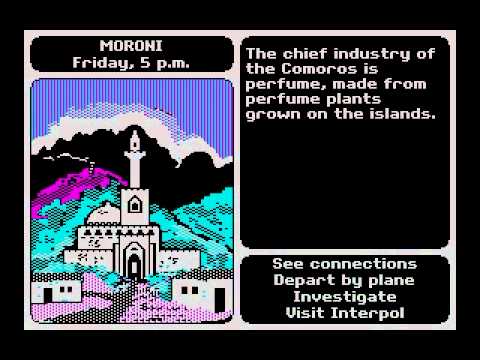
First, of course, was the computer game, which I immediately became obsessed with when it was released. I loved the geography and the mystery aspects equally, and spent hours happily tracking down Carmen's henchmen. When I finally caught the lady herself, I considered it one of the defining accomplishments of the year. Like any junkie, I needed more product to get my fix, and Where in the World is Carmen Sandiego? was soon joined by Where in the USA..., Where in Europe..., Where in Time..., and Where in America's Past..., all of which I played the shit out of.


Aging did not cure me of this obsession at all, and I've played at least three newer iterations of this game into adulthood. I'd happily play another one if it looked even the least bit promising. Then, when I was in junior high, a new game show based on Carmen Sandiego premiered, and I fell in love all over again. It was a well-designed show, and the only problem I ever had with it was some misplaced anger that I didn't get to be on it, and a bunch of idiotic kids did. Sometimes my anger turned to sympathy, because the final challenge could be as simple as identifying US states or as devious as differentiating the countries of sub-Saharan Africa.


Not only was the game show itself pretty amazing, but the theme song has been firmly entrenched in my brain for the past twenty years. It got to the point that I purchased an entire Rockapella album just so I could get my hands on the Carmen Sandiego song.

Towards the end of high school, yet another Carmen Sandiego property was released; this one was a cartoon show geared towards kids and preteens. Did that matter to me in the slightest? It did not.


I watched Where on Earth is Carmen Sandeigo? happily, and a few years ago, purchased the first season DVDs, which fills in wonderfully as a Laundry Show. I thought the matter would rest there until they finally make the movie I've heard whispers about or release a game for a new gaming system. But as I went about writing this entry, I happened upon a collection of all forty episodes of the cartoon for sale on Amazon. Yep, it's on the way. I will never outgrow Carmen Sandiego.
0

The Pantheon: Scrubs (My Half-Acre / Her Story II)

Netflix doesn't have the greatest catalog for instant streaming right now, but it does have a fair collection of "Laundry Shows". That is, television shows you've already seen and enjoyed, and can put on in the background to pay the barest amount of attention to while you fold laundry or balance your checkbook or whatever. Scrubs is a good example of a Laundry Show, and with a lot of things to do around the apartment lately, I've essentially been able to shotgun the entire series. Freed from the restriction of one episode per week, it was easier to see the overall series as a big picture, and to pick out when it hit its peak. For Scrubs, the pinnacle came in a two-episode arc midway through the fifth season:

My Half-Acre (Season 5, Episode 9):

J.D. gets set up on a blind date with Julie, played by Mandy Moore. I confess that when Mandy Moore first came to my attention, I dismissed her entirely as another bland pop princess. In the time since, though, she's really come into her own as an actress, and I really enjoy her performance here, from the very first moment.


In the B-plot, Turk, Ted, Lloyd, and the Janitor form an air band, and when Turk disrespects Kelso, air-banding is forbidden in the hospital. Turk eventually apologizes, and the band is allowed to reunite. The C-plot is inconsequential, but inoffensive. Dr. Cox has issues showing affection to his son, now that Jack isn't an infant anymore, but he eventually comes around. This storyline is mostly used to fill time, but doesn't drag down the episode, while the air band scenes lead to some fun musical interludes. J.D. inevitably starts sabotaging the relationship with Julie, and reluctantly takes Elliot's romantic advice to slow down, which improves things dramatically.


J.D. wouldn't be J.D without a streak of childish immaturity, though, and he decides to eventually disregard Elliot's sage wisdom by rushing into buying the titular property with Julie, rushing their relationship forward.

Her Story II: (Season 5, Episode 10):

One of the rare episodes where J.D. passes off narration to another character (Carla, in this case), this episode also wraps up the Julie arc. Carla spends the episode obsessing over her inability to get pregnant and her anxiety about her encroaching age. The Janitor tortures her by comparing her unfavorably with a hot, young nurse, and she's embarrassed to admit to the dreamy hospital gynecologist that she fears she's too old to get pregnant. Being self-conscious about her age also drives her to defiantly drag Julie, Elliot, and Jordan out for drinks, protesting that she can still handle a bender like she used to. She cannot.


Meanwhile, J.D. introduces Julie around to everyone. She impresses everyone at the hospital, whether it's sharing embarrassing stories about J.D. with Dr. Cox or revealing to Turk that her godfather is Billy Dee Williams. Things go sour when J.D. starts to become annoyed that Julie always says "That's so funny!" instead of laughing at anything. Turk sees him going down a bad road, and immediately stages an intervention so that J.D. doesn't ruin another ideal relationship over a trivial detail.


The advice doesn't take, and Turk's second attempt to help by trying to overload J.D.'s system with "That's so funny!" by watching Uncle Buck with Julie just drives him crazier. He and Julie get into a blowout fight, but before any lasting damage is done, he manages to dig deep for some emotional maturity, and assures Julie that the trivial stuff doesn't bother him anymore. Their joy is short-lived when they realize that they want fundamentally different things out of life, and they break up for good.

As is often the case with Scrubs episodes, both J.D. and Carla learn life lessons. But enough about all that accepting who you are and what you want out of life! These two episodes are jam packed with zingers, and if you enjoyed this show at all, this is the point that your funny bone will be the most ticklish.
0

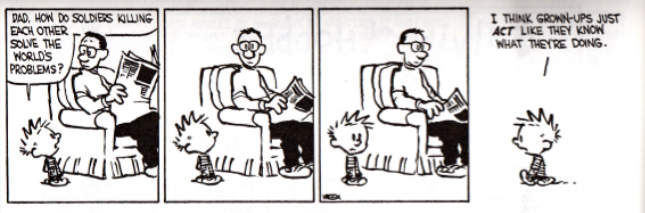
The Pantheon: Calvin and Hobbes

In a way, it's kind of a cop-out to reserve a spot in the Pantheon for something that is universally adored. The whole point of the Pantheon is to highlight things in entertainment that achieve metaphorical induction into my personal Hall of Fame, despite what the rest of the world thinks. But when it comes to Calvin and Hobbes, I have literally never met a single person who dislikes it. It's in everyone's Pantheon.

It's not hard to see why. There's the obvious reason, of course: It's hilarious. That's really all you need out of a comic strip, right? Calvin and Hobbes didn't stop there, though. It was funny, yes, but it could also be emotionally heartfelt. Or deadly serious. Or slyly political.


Thanks to Calvin's active imagination, the strip could go in any of a thousand directions, from monster snowmen to the farthest reaches of outer space, but it always came back to a bratty kid and the unshakeable bond he had with his best friend. The comics page hasn't been the same since they left.

0

The Pantheon: Clue

Everyone has their own personal Hall of Fame. The books you read a thousand times without getting bored. The actors that knock every single performance out of the park. The television episode that perfectly encapsulates what you like about a show. These are the gems of the entertainment world - the unimpeachable properties that earn a rare A+ in the report card of your heart.

The first thing that gets enshrined in my pantheon is Clue. I fell in love with the board game as a kid. And why wouldn't I? After all, it combines murder mysteries, secret passages, colorful characters (literally!), and the person who wins is the one who solves a logic puzzle the fastest. In short, everything I love.


I've played my way through most of the variations and spinoffs of the game: Clue Master Detective, the computer version, the Sega version, the VCR version, the iPod app, and so on. None of them is terrible, but none have been able to really improve on the original. I still like to take it down off the shelf when I'm able to find a willing group. You can keep your Taboo and your Cranium. Just give me Mrs. White, a lead pipe, and a billiard room.

Then there's the movie Clue, which is also lovable for an entirely different set of reasons. The first time I saw it, I laughed my head off, despite being so young that half the jokes sailed a mile over my head. This was the first movie I saw Madeline Kahn in, and she was so wonderful that it inspired me to seek out her other films, for which I'll always be grateful. I have lost count of the number of times I've watched this movie, and despite knowing every word and gesture by heart, I never get tired of it.


I know it's not the most highbrow film in the world, but it always brings an idiotic grin to my face, and I'm sure as hell not going to undervalue that. Now, if you'll excuse me, I'm off to make some monkey's brains. Although popular in Cantonese cuisine, they're not often to be found in Washington, D.C.
 
Copyright © Slice of Lime